
Smart Binary Trading Strategies for Better Decisions
📊Master effective binary trading strategies to boost your decisions. Learn risk control, analysis methods, and tips for better trading outcomes in Kenya.
Edited By
Ethan Roberts
Binary options trading has steadily gained traction in financial markets worldwide, including Kenya. With the rise of automated trading bots, many traders are turning to technology to improve decision-making and speed. Understanding how these bots work and the strategies behind them is key to tapping into their potential.
Automation in trading isn’t just about setting and forgetting; it requires careful planning, testing, and tweaking to fit the market conditions and your risk appetite. This is especially true in the binary options space where trades are often short-term and outcomes all-or-nothing.

In this article, we’ll break down the nuts and bolts of binary bot trading strategies, explore what works best in Kenya’s market environment, and offer tips to keep your approach realistic and efficient. Whether you’re an investor looking to add automation or a student wanting a solid grasp of the topic, this guide is designed to give you a straightforward path to smarter binary trading with bots.
Automation can simplify the trading process, but understanding your tools is vital to avoid costly mistakes and improve your chances of success.
We'll cover:
What binary bots are and how they operate
Factors to consider when choosing or building a strategy
Ways to manage risk effectively
Improving bot efficiency for the Kenyan market
This foundation will help you navigate the world of binary bot trading with confidence, armed with practical insights and examples tailored for local traders.
Getting a solid grip on what binary bots are and how they operate is the first step toward making them work for you in binary options trading. These tools aren't just fancy toys; they can handle the grunt work of scanning markets and executing trades fast and consistently, especially in volatile markets like Kenya's where timing is everything.
Knowing their role helps you see how they fit into your broader trading strategy—whether you're aiming to reduce emotional bias or trade round the clock while you catch some zzz's. Plus, understanding their mechanics lets you set realistic expectations about what bots can and can't do, which helps avoid costly mistakes.
A binary bot is a software program designed to automate the process of trading binary options. It bases its decisions on predefined algorithms to predict price movements and execute buy or sell orders at lightning speed. Instead of the trader manually clicking buttons, the bot scans data and reacts instantly, often within milliseconds.
This automation cuts down human errors and emotional trading, which can wreck otherwise logical decisions. For example, a trader using a bot that relies on moving averages can have it automatically enter a trade whenever a short-term average crosses above a long-term average, without needing to babysit the charts.
Popular platforms in Kenya and beyond include Binary.com (now Deriv), IQ Option, and Pocket Option, many of which support binary bots either through native software tools or API connections. On the software side, programs like Binary Bot and MetaTrader (with customized scripts) dominate, offering user-friendly interfaces to build and test your trading logic.
Choosing a reliable platform with transparent execution and minimal downtime is vital. For instance, Deriv’s Binary Bot allows visual script-building, making it handy for beginners to set up without deep coding skills.
Binary bots rely on algorithms—essentially sets of rules derived from technical indicators, price patterns, or other market data—to decide when to enter or exit trades. For example, an algorithm might execute a trade when the Relative Strength Index (RSI) signals an overbought state, betting the price will soon dip.
These algorithms remove guesswork and keep trading disciplined. They help take quick decisions that humans might hesitate on during fast-moving markets.
One of the biggest perks is how fast these bots react. When a signal hits, they don’t blink; they act immediately. This rapid execution prevents missed opportunities, especially during volatile news releases or market swings.
Besides speed, bots stick to their programmed plan without giving in to emotions. That consistency means your strategy is applied uniformly, which helps in assessing what works and what needs tweaking over time.
In short, understanding binary bots' structure and function is like knowing the engine under the hood before driving; it ensures you're in control, not just along for the ride.
When it comes to binary bot trading, nailing the key elements of a successful strategy is what separates the amateurs from the pros. The whole point is to build or choose bots that don't just trade on autopilot but execute well-thought-out moves based on solid analysis and sound risk management. Without this foundation, you might as well flip a coin.
A good binary bot strategy hinges on two main pillars: accurate market analysis and strict risk control. These ensure the bot acts wisely when conditions change, rather than blindly gambling. For example, consider a bot that relies on moving averages but fails to limit losses. It might chase trends until all its capital is wiped out during sudden market reversals.
In practice, incorporating detailed technical indicators, clever trend spotting, and sentiment analysis helps the bot sift through the noise. Then, layering in risk management techniques like stop loss settings, proper position sizing, and diversification helps protect that hard-earned capital. Let’s break these down further to understand how they play out in the real trading world.
Technical indicators are like the heartbeat monitors of the trading world—they give vital signs about price movements and potential reversals. Bots use indicators such as Bollinger Bands, the Relative Strength Index (RSI), and moving averages to pinpoint entry and exit points.
For instance, an RSI value above 70 often signals an overbought condition, which could mean the price is about to drop. A smart binary bot can automatically detect this and decide to execute a 'put' option to profit from the decline. Using technical indicators helps transform raw data into actionable trading signals.
Spotting trends is about catching the market's vibe before the crowd does. Bots analyze price movements to figure out whether the market is rallying, falling, or stuck sideways. This lets traders ride momentum waves rather than fighting against them.
For example, if a bot identifies an upward trend through a series of higher highs and higher lows, it might trigger several call options to ride that momentum. The key is for the bot to be sensitive enough to spot the start of a trend but not so jumpy that it chases fakeouts. It’s a skillful balance.
Sentiment analysis taps into the mood of the market, which isn’t always clear from charts alone. Some advanced bots scan social media, news headlines, and financial reports to gauge how investors feel about an asset.
Take an example where a bot reads positive news about a company's earnings beating expectations. It then biases its trades towards calls, anticipating a price surge. Integrating sentiment helps bots adjust quickly to market swings caused by news—not just technical patterns.
Stop loss and take profit settings act as your safety nets. They tell the bot when to bail out of a losing trade or lock in gains, preventing emotional blowouts.
Suppose a bot invests $100 in a trade with a stop loss at 10%. If the loss touches $10, the bot automatically exits, saving you from deeper damage. Similarly, setting a take profit level at, say, 15% means the bot doesn't get greedy and banks profits before the market swings back. These settings ensure trades don’t run amok.
How much the bot invests in each trade matters hugely. Position sizing relates to the portion of your total capital you risk on a single trade. Good bots adjust position size to market conditions and your chosen risk threshold.
For instance, a bot set to risk 2% per trade will only put up $20 if your total capital is $1,000. This prevents overexposure to volatile moves and helps keep your bankroll intact over time. Proper sizing keeps losses manageable and helps the bot stick around longer.
Diversification in binary bot trading means spreading trades across different assets or strategies. Instead of putting all your eggs in one basket (say, only currency pairs), a diversified bot might trade stocks, commodities, and indices alongside.
This helps smooth out the highs and lows. If one asset hits a rough patch, others might be moving the other way. For example, during a geopolitical event, gold prices might rise while stock markets fall—diversifying gives your bot more balanced opportunities.
Successful bot strategies depend heavily on blending sharp market insight with strict money management. The market rarely follows a single rulebook, so relying on multiple analysis techniques and risk controls can make the difference between steady gains and costly blowouts.
Applying these elements thoughtfully will boost your binary bot trading from guesswork to a well-oiled strategy.
When it comes to trading with binary bots, knowing which strategy to use can make a big difference between hitting consistent profits and just spinning your wheels. Popular strategy types offer clear frameworks that many traders rely on to manage risk and squeeze out gains. Understanding these strategies is key, especially if you're in Kenya’s dynamic market where economic conditions and asset behaviors can shift quickly.
Using tested approaches provides a foundation, but the real power lies in tailoring them to fit your trading style and risk appetite. Below, we'll walk through common strategy types and give practical examples you can experiment with.
Trend following is like hopping on a moving train — you aim to catch the market momentum and ride it until signs tell you to get off. This method revolves around spotting established price directions and making trades aligned with those moves.
Moving averages are the bread and butter of trend trading. They smooth out price data to help filter out the noise and highlight the overall direction. For example, a 50-period moving average crossing above a 200-period moving average often signals an upward trend—that’s known as a “golden cross.” Your bot can be programmed to automatically place a call trade when this happens, betting the price will keep climbing.
This technique is straightforward and reliable because it reduces emotional decision-making. In Kenya’s Forex markets, say when trading USD/KES, these averages can help catch uptrends triggered by economic announcements or policy changes. But be cautious in choppy markets, as moving averages can lag and produce false signals.
Unlike simply following the trend, momentum strategies focus on the speed behind price moves. Think of it this way: if a sprint runner picks up pace, momentum measures whether they're getting faster or slowing down. Indicators like the Moving Average Convergence Divergence (MACD) or the Rate of Change (ROC) help your bot gauge this speed.
A practical tactic is to buy options when momentum indicators confirm a strong move and sell when they show signs of weakening. For instance, if the MACD line crosses above its signal line, the bot might trigger a call option. This approach catches emerging trends early, giving an edge in fast-moving markets such as stocks influenced by sudden news.
Sometimes prices don’t run in trends but bounce within set boundaries. Range trading strategies capitalize on this by identifying where prices tend to reverse.
Support and resistance zones are levels where price repeatedly halts or reverses. By defining these key zones, your bot knows where to enter put or call trades. For example, if the EUR/USD pair repeatedly falls to 1.1000 and bounces back, 1.1000 becomes a support zone.
Programming your bot to buy a call option near support and a put option near resistance can rack up small but frequent wins. This method works well in markets with low volatility or during periods of consolidation.
Relative Strength Index (RSI) measures how overbought or oversold an asset is on a scale of 0 to 100. An RSI above 70 suggests the asset might be overbought (and due for a pullback), while below 30 indicates oversold conditions.
Using RSI with your bot means it can open put positions when RSI hits the high threshold and call positions when it falls low, ideally within a sideways market. This helps exploit regular price swings without betting on a trend, a useful practice when major events or earnings keep prices stuck in a range.
Economic announcements can shake markets suddenly, often causing wild price swings. Bots that react quickly to news can catch profitable moves or avoid losses.
Bots can be configured to monitor scheduled news such as Kenya’s GDP releases or US Federal Reserve statements. When a major announcement hits, volatility spikes and trends might form fast.
A bot set to place trades just after key data drops—say it buys call options if the economic figure beats expectations—can benefit from rapid price jumps. However, this requires solid programming and quick data feeds to avoid getting caught in whipsaws.
High volatility means bigger price ranges but greater risk. Bots can adjust their settings during these times to trade fewer contracts, widen stops, or even pause trading altogether to avoid heavy losses.
Smart volatility handling keeps your strategy sustainable over the long run, especially in unpredictable markets. For instance, during political elections or when unrest affects Kenyan shilling exchange rates, tempering bot aggressiveness can prevent drawn-out drawdowns.
In summary, understanding and selecting the right binary bot strategy types—whether riding trends, bouncing in ranges, or reacting to news—helps traders stay ahead. Bots are tools, but their success hinges on the strategy they execute and the trader’s vigilance in managing risks and adapting to changing markets.
Selecting or tailoring the right binary bot strategy is a step that can't be overlooked if you're serious about trading success. It’s not just about picking a ready-made option and crossing your fingers. The real advantage of binary bots comes from matching their performance to your individual trading goals, risk tolerance, and market outlook. A one-size-fits-all approach rarely works because markets and traders are ever-changing. Customization gives you flexibility—so you can tweak your bot’s behavior to fit current conditions or your evolving preferences.
Imagine a trader interested primarily in short-term gains during volatile sessions. Their binary bot should be set up differently from someone who’s aiming for steady profits over weeks or months. Without carefully weighing key elements like trading goals, available capital, and market conditions, you risk applying a strategy that either moves too fast for your comfort or lags behind market shifts.
Before you decide on a bot strategy, clarify what you want out of your trading. Are you after quick wins within minutes, or looking to hold trades longer for bigger returns? Your trading style—whether aggressive, conservative, or balanced—directly affects the kind of bot settings you need.
For instance, a trader with a cautious approach might prefer a bot that emphasizes risk management features like tight stop-loss orders and smaller trade sizes. On the flip side, a more aggressive trader might configure the bot with wider thresholds and higher exposure per trade. Defining your goals helps prevent frustration and keeps your trading aligned with what you really want.
The state of the market plays a huge role in binary bot effectiveness. Some strategies work best in trending markets, while others shine in sideways or range-bound markets. Consider whether the markets you follow are typically volatile or stable.
For example, during periods of economic announcements or sudden news, a bot designed for fast reaction and news-driven trades will likely outperform a purely technical trend-following bot. Conversely, stable markets might call for bots tuned to spot well-defined support and resistance zones.
Knowing the market environment means you select or customize a bot that isn't just running on autopilot but rather adjusting sensibly to the context.
Your available capital sets the boundaries for your trading bot’s settings. Smaller budgets require more cautious position sizing to avoid quick wipeouts, while larger capital allows more room for experimentation or higher-risk strategies.
For example, if you have KES 20,000 to trade, it wouldn’t be wise to have the bot risk KES 5,000 on each trade. Instead, setting risks closer to 2-3% per trade helps protect your balance. On the other hand, with KES 500,000, you can afford to diversify your bot’s approach or increase your trade sizes without blowing out your account.
Making your bot strategy fit the size of your trading fund is crucial for sustainable growth.
Bots rely heavily on their programmed settings to make decisions. These parameters—things like entry triggers, stop-loss points, and take-profit targets—need to be personalized. What works for one trader or market won’t necessarily work for another.
Say your bot uses moving average crossovers to signal trades. You might adjust the short and long moving average periods based on your preferred trade duration or the typical market speed. Tightening or loosening stop losses will depend on how much risk you're willing to stomach.
Adjusting these fine details lets you strike a balance between risk and reward tailored to your style.
Before letting a bot loose on real money, running tests against historical data is a smart move. Backtesting shows you how your customized strategy would have performed in the past and highlights weak spots.
For example, if backtesting reveals your bot struggles during low-volatility periods, you might add filters to halt trading until conditions improve. Conversely, success in historical volatile times can boost confidence.
While past performance is no guarantee of future results, thorough backtesting reduces guesswork and helps you develop a strategy with a more predictable edge.
Choosing and customizing your binary bot isn’t about finding the perfect setup overnight, but about making informed, incremental improvements aligned with your goals, capital, and the market you’re diving into. This way, your bot becomes a tool designed to work for you—not the other way around.
When navigating the world of binary bot trading, it's easy to fall into traps that can drain your account faster than you expect. Being aware of common pitfalls helps traders steer clear of costly mistakes. In binary bot trading, pitfalls often arise from overconfidence in automated systems or neglecting ongoing adjustments. Understanding these risks allows you to keep your strategy nimble and avoid surprises that come with changing market conditions.
Fitting bots too closely to past data can be a sneaky problem. This happens when a trading bot’s parameters are tuned so perfectly to past market movements that it performs exceptionally well on historical data but fails when faced with new market situations. Think of it like trying to fit a pair of shoes exactly to last year's foot size, only to find this year your feet have grown a bit. Over-optimization leads to strategies that are too rigid, responding well only to previously seen patterns.
To avoid this, focus on broad, adaptable rules rather than overly specific ones. Use diverse datasets for backtesting—different timeframes, various market conditions, and contrasting asset behaviors. This creates a bot setup that’s flexible enough to handle surprises, rather than just replaying the past.
Risk of poor future performance naturally follows from over-optimization. If your bot is stuck chasing yesterday’s trends, it's likely to underperform when the market shifts. For instance, a bot designed on data from a bull market might struggle during a sudden downturn or volatile period.
To mitigate this risk, implement continuous evaluation. Keep an eye on the bot’s live trading results and compare them against expectations. Don’t hesitate to adjust the strategy parameters regularly or even switch to a different approach if market dynamics deviate from your initial assumptions.
Binary bots might run on autopilot, but market conditions don’t stay put. Failing to update strategies is a big no-no. What worked months ago might not hold water today. For example, a bot using moving averages might miss sharp price swings caused by geopolitical events or sudden regulatory changes.
Regularly review and refine your bot’s strategy. Set calendar reminders for monthly or quarterly strategy audits. This keeps your trading approach aligned with current market realities and prevents it from going stale.
Adapting to volatility shifts is equally important. Volatility impacts trade outcomes significantly. When the market turns choppy, a bot optimized for steady trends might rack up losses quickly.
Consider using volatility indicators like the Average True Range (ATR) or Bollinger Bands within your bot’s logic. These tools help adjust trade parameters—such as trade size or expiry times—to the prevailing market mood. Making these tweaks means your bot isn’t just trading blindly; it’s responding like a seasoned trader, feeling the market’s pulse.
Remember: A well-built binary bot shines when it adapts and evolves. Avoid the trap of “set and forget.”
By keeping these pitfalls in check, you’ll save yourself from common headaches and improve the chances of consistent outcomes with your binary bot trading. It’s not just about having a good bot—it's about nurturing it with the right mindset and management practices.
Managing risk is a cornerstone of any trading strategy, especially when binary bots are involved. These automated systems execute trades based on preset algorithms, which means if the risk is not well controlled, small mistakes can quickly lead to significant losses. For traders in Kenya and elsewhere, understanding how to manage risk while using binary bots isn't just a good idea—it's essential.
Automated trading removes emotion from the equation but also demands solid safeguards. Without proper risk management, bots may chase losing trades or overcommit capital during volatile market conditions, wiping out gains in no time. The main benefits of good risk control include safeguarding your capital, minimizing losses during unpredictable market moves, and keeping your trading sustainable over the long haul.
Consider a scenario where a bot is configured to invest 10% of the account on every trade without limits. If a string of unfavorable trades appear, the losses compound rapidly, leaving the trader exposed. Managing risk effectively avoids such pitfalls by systematically limiting exposure and locking in profits when possible.
Stop losses are one of the simplest yet most effective risk management tools available. They instruct the bot to automatically exit a trade once it hits a predefined loss threshold, preventing bigger drawdowns. For binary options, you might not use stop losses the same way as in forex, but many bots support "time-based stop" features or custom exit rules tied to price movements.
Setting your stop loss isn’t just about choosing a fixed number. It needs to reflect market conditions—tight enough to avoid big losses but loose enough to prevent being stopped out on minor, temporary price blips. For example, a trader using the Olymp Trade platform might set a 5% stop loss limit based on volatility seen in the last hour. This approach balances protecting capital and allowing the bot room to operate.
Limiting how much of your total capital is risked in individual trades is another critical aspect. A common rule many traders follow is risking no more than 1–3% of their trading account on a single trade. This prevents any single loss from seriously denting overall funds.
If your bot trades automatically without limits, you might wake up to a blown account. Instead, configure your bot's settings so that it cannot exceed a fixed percentage per trade, aligned with your risk appetite. For instance, if using a trading bot on IQ Option, you can set a maximum trade size relative to your total balance. This ensures steadier growth and doesn’t let one bad day wipe you out.
Even the most carefully designed bots need regular checkups. Monitoring performance is key to spotting when risk levels creep up or when a strategy starts to fail under new market conditions. Use analytics tools provided by platforms like Binary.com or third-party apps to track win rates, drawdowns, and average loss sizes.
Regularly reviewing this data lets you act quickly—adjusting the bot or pulling back capital if losses accumulate. For example, if your bot's win rate drops below 50% over several weeks and losses deepen, it’s a clue to revisit the risk settings.
Markets aren’t static; volatility, trends, and economic news can all change how your bot behaves. Adjusting risk settings ensures the bot adapts rather than falls behind.
Say your bot was performing well with a tight stop loss but volatility spikes due to an unexpected Kenya bank interest rate change. Loosening your stop loss temporarily or reducing trade sizes can help prevent premature losses during this turbulent phase. Alternatively, you might tighten risk when the market shows less movement to protect gains.
Consistent risk management isn’t about eliminating losses entirely; it’s about controlling those losses so they don’t eat into your entire trading balance.
By applying these practical measures—using stop loss functionality thoughtfully, limiting exposure per trade, monitoring results closely, and adjusting settings based on market activity—you significantly raise your chances of sustained success with binary bots. These steps keep you in control and make automated trading a sensible part of your investing strategy, not a gamble.
Trading with binary bots isn't just about formulas and strategy; it's also wrapped up in legal and ethical questions that can make or break your success. Traders may be tempted to jump straight into automation, but understanding the rules and maintaining integrity is just as important as picking the right bot or tweaking your algorithm.
In Kenya, where the regulatory landscape is still developing, knowing the boundaries helps avoid costly mistakes and builds trust with brokers and other participants. Ethical behavior, on the other hand, isn’t just about not breaking the law—it ensures that the market stays fair and that your reputation doesn’t take a hit. Let’s break this down more.
Kenya's Capital Markets Authority (CMA) oversees trading activities, including those involving automated systems like binary bots. While binary options trading itself sits in a gray area and sometimes faces restrictions, automated trading isn’t outright banned—but you need to be careful. The CMA requires operators to be licensed and transparent, which means bots must operate within approved platforms.
For example, if you're using binary bots on platforms like IQ Option or Binomo, you should ensure these platforms meet local licensing standards or operate internationally with proper protection for traders. Ignoring local laws might not just lead to fines; you could also lose your funds without any way to recover them.
Compliance isn’t just ticking boxes—it's about following certain procedures to keep trading clean. In Kenya, this means:
Using only licensed brokers and platforms.
Ensuring automated systems don’t engage in market manipulation like quote stuffing or wash trading.
Keeping records of trades and bot behavior for possible audits.
Traders need to verify that their bot strategies align with these rules. Failure to comply can cause your account to be frozen or worse. For instance, bots that flood orders to confuse market prices aren’t just unethical; they’re illegal under market conduct rules.
Not every shortcut is fair play. Some bots exploit loopholes or use questionable tactics like creating fake volume or front-running orders, which can hurt other traders and distort the market. Such practices may seem tempting for quick wins, but they come with serious risks.
To stay ethical, programmers should design bots that follow market rules and respect fair execution. For example, a bot that patiently waits for signals rather than aggressively spamming orders is much more sustainable. Traders should avoid bots advertised as "guaranteed winners" or those that manipulate data.
Transparency goes a long way in trading. Bot developers and sellers should disclose how their software functions, including risks and limitations. For example, if a bot performs well only under certain market conditions but falters during high volatility, the user needs to know this upfront.
Building user trust also means clearly communicating updates, changes in strategy, and providing real-time monitoring tools. When traders feel informed and in control, they're less likely to misuse the bot or make rash decisions.
Remember, a binary bot isn’t some magic box but a tool that needs careful handling within legal and ethical lines. Getting this right protects your investment and contributes to a healthier trading environment for everyone.
By understanding Kenyan regulations and emphasizing ethical usage, traders can navigate binary bot trading more confidently. Following local laws and being transparent builds a foundation that supports long-term success, not just quick wins.
Getting started with binary bots can seem a bit like stepping into alien territory for many traders, especially those who are more used to manual trading processes. However, understanding the nuts and bolts early on makes all the difference. Practical tips help you avoid the common pitfalls that first-timers face and allow your bot trading efforts to actually pay off.
Starting smart means choosing the right tools, knowing how to set them up, and testing them thoroughly before going live. This hands-on approach minimizes risk and helps build confidence, enabling you to fine-tune your strategy as you go. Remember, automated trading isn’t just about letting the bot do its thing—it’s about pairing your strategy with reliable software and consistent monitoring.
When it comes to picking software for binary bots, not all programs are created equal. The feature set and the reputation of a bot can make or break your trading experience. It’s important to look for bots that support a variety of technical indicators, offer customizable settings, and have a user-friendly interface. Software like BinaryBotPro and IQBot have gained traction due to their flexible strategy settings and decent execution speeds.
Evaluating a bot’s reputation can be a bit tricky, but paying attention to verified user feedback across forums and review platforms is a good practice. Also, consider bots with transparent origins and clear development histories rather than those shrouded in mystery. Popular bots usually have active communities sharing tips, bugs, and updates.
User Reviews and Support are equally vital when choosing your bot. Even the best software can come with quirks or issues that only daily users can reveal. Look for platforms that offer responsive customer service and clear documentation. A solid support system means you won’t be left in the dark if the bot acts up or if you have questions about optimizing your settings.
One of the smartest moves when getting started is to demo trade before live use. Demo accounts simulate real market conditions without risking your capital, allowing you to see how your bot performs in practice. This step is crucial because it helps uncover any flaws in your strategy or bot settings without financial consequences.
Once your bot is live, regular monitoring and updates become part of the routine. Markets evolve, and so should your bot strategies. Keep an eye on performance metrics like win rate and drawdown, and adjust parameters accordingly. Updating your bot’s algorithm based on recent market trends keeps it sharp and reduces exposure to unexpected swings.
Starting out with automation isn’t about setting and forgetting; it’s about continuous learning and adjustment.
Remember, the goal isn’t just to automate a strategy but to enhance your trading discipline and reaction speed through technology. With careful software selection, thorough testing, and ongoing attention, binary bots can become valuable allies in your trading toolkit.
Keeping an eye on future trends in binary bot trading isn’t just about staying current—it’s about positioning yourself to make smarter, faster, and safer decisions as the market evolves. In an environment that shifts quicker than you can blink, understanding the direction in which automated trading is heading helps traders avoid being caught off guard by new tech or regulations.
One big reason future trends matter: binary bots rely heavily on both data and technology. If these get better, the strategies have to be tuned accordingly. For example, with the rise of more advanced algorithms, bots can now analyze market sentiment and macroeconomic signals that used to require human intuition. Staying updated not only means better strategy adjustment but also reduces risks tied to outdated systems.
AI and machine learning are popping up everywhere in finance, and binary bot trading is no exception. These technologies help bots learn from past trade outcomes and market behavior, fine-tuning their actions without needing manual intervention every time. For example, a machine learning-powered bot can adjust its parameters based on recognizing changes in volatility patterns rather than sticking to one fixed approach.
What makes this especially useful is the bot's ability to spot complex patterns that a human might miss. Imagine a bot that notices subtle shifts ahead of an economic announcement and adjusts its trade entries to avoid heavy losses. For those getting started, looking for bots that mention "reinforcement learning" or "neural networks" is a good start.
Adaptive strategies are the natural follow-up to AI incorporation. Instead of running on a static set of rules, adaptive bots adjust their trading plans based on real-time data and evolving market conditions. This means they might switch between trend-following and counter-trend approaches depending on the situation.
The practical upside? Less manual tweaking and a better shot at staying in sync with the market pulse. For traders, it means less time babysitting the bot and more confidence it isn't stuck in yesterday’s mindset. To put this in perspective, if a binary bot equipped with adaptive logic detects a sudden shift in EUR/USD volatility, it might temporarily reduce trade size or skip trades that seem too risky until things settle down.
Regulatory landscapes can be a headache but ignoring their impact on automated trading is risky. Different countries, including Kenya, are tightening rules around binary options and automated bots to protect investors. For instance, certain bots must now provide transparency on how trades are triggered or limit the maximum trade size.
Understanding and following these regulations isn’t just a legal must—it actually protects your capital from sudden suspensions or platform shutdowns. Traders should keep an ear out for announcements from bodies like the Capital Markets Authority (CMA) in Kenya and adjust their bot usage accordingly.
Technology marches on, bringing both opportunities and challenges. Apart from AI, better connectivity, cloud computing, and even blockchain tech are impacting bot trading. Faster execution speeds thanks to 5G, for example, mean bots can place trades milliseconds ahead of competitors.
On the flip side, this also means the market gets more competitive, and older bots that can’t keep up with these tech advances fall behind. For those keen on maintaining an edge, investing in bots regularly updated to harness new tech makes practical sense. Plus, leveraging cloud-based bots brings the benefit of consistent uptime and access from multiple devices.
Staying informed about future trends enables you to upgrade your strategies in step with the market and avoid getting stuck with outdated setups that cost more than they earn.
In sum, keeping your finger on the pulse of AI advances, adaptive algorithms, regulatory shifts, and tech upgrades is key to squeezing the most out of binary bot trading in Kenya’s dynamic market.
📊Master effective binary trading strategies to boost your decisions. Learn risk control, analysis methods, and tips for better trading outcomes in Kenya.

Discover practical binary trading strategies and risk management tips designed for traders in Kenya. Improve your chances for consistent success 📈💡
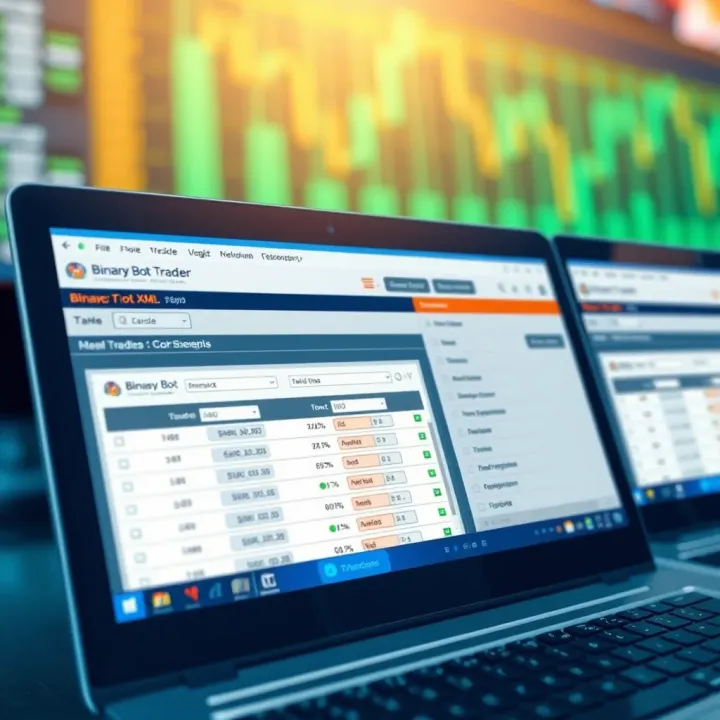
📊 Learn how Binary Bot XML files shape trading bots, their structure, and tips for customization to improve automated trading efficiency — perfect for Kenyan traders!

🤖 Master Binary Bot XML for smarter automated trading in Kenya! Learn structure, tweaks, and security tips to boost your Bot platform success today.
Based on 13 reviews