

Forex Trading Basics for Kenyan Traders
Learn forex trading in Kenya 🌍 with a practical guide covering market basics, key terms, strategies, risk management, and local regulations to trade confidently.
Edited By
James Thornton
Forex trading has steadily gained traction among Kenyans looking to diversify investment options beyond traditional avenues like the Nairobi Securities Exchange (NSE) or property. The foreign exchange market, or forex, involves buying and selling different currencies. This market operates 24 hours a day, five days a week, making it one of the most active financial platforms worldwide.
Understanding forex trading requires clarity on several basics before you start. First, currencies are traded in pairs. For example, the USD/KES pair represents how many Kenyan shillings it takes to buy one US dollar. When a trader speculates that the shilling will weaken, they might buy USD/KES, hoping to sell later at a better rate for profit.
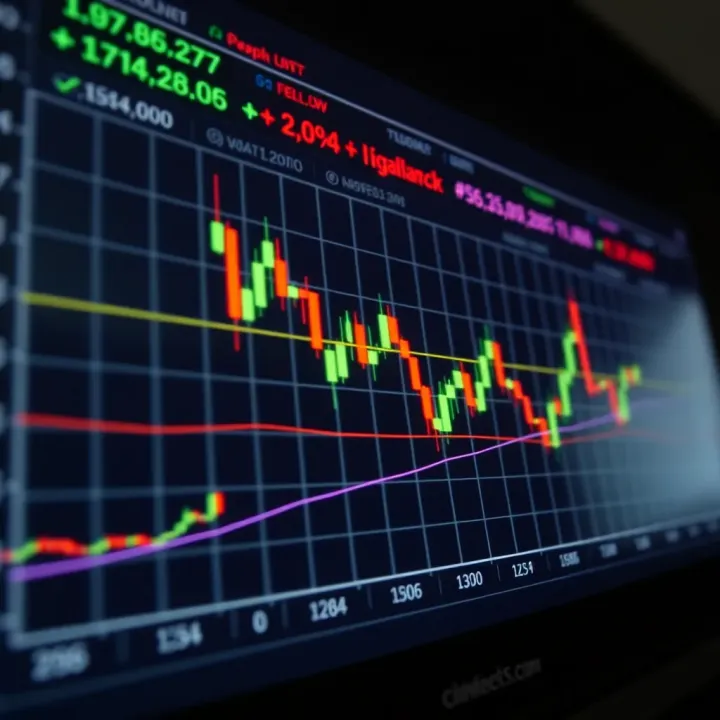
It’s essential to recognise that forex trading is not just about luck but involves risk management, research, and careful analysis of global events that affect currency values.
Before diving in, make sure you grasp the key concepts such as pips (the smallest price movement), leverage (borrowing funds for bigger trades), and spread (the difference between buy and sell prices). For instance, a beginner should start with low leverage to avoid large losses. Kenyan brokers often offer varying leverage options, but using high leverage without sufficient knowledge can quickly erode capital.
To prepare,
Open a trading account with a reputable broker registered with the Capital Markets Authority (CMA) Kenya.
Practice with demo accounts to test strategies without risking real money.
Keep an eye on Kenyan shilling trends, especially in relation to major currencies like the USD, Euro, and GBP, since local economic news can cause notable shifts.
In the next sections, this guide will delve into strategies suitable for beginners, outline common pitfalls to avoid, and provide links to practical PDF resources tailored for the Kenyan context. Navigating forex with informed steps ensures you trade confidently and avoid falling into scams or pitfalls common in the fast-paced market.
Starting with solid knowledge helps you treat forex trading not as gambling but as a disciplined investment approach that fits your financial goals.
Understanding forex trading is vital if you're starting out in the Kenyan market. This knowledge allows you to make informed decisions while navigating currency markets, which operate differently from stocks or commodities. Knowing how forex works, which currencies matter most, and the factors influencing exchange rates can help you avoid common pitfalls and boost your confidence.
Forex trading involves buying one currency while simultaneously selling another, aiming to profit from changes in the exchange rates. It’s the biggest financial market worldwide, with daily trades exceeding $6 trillion. Unlike stock exchanges, forex markets operate 24 hours from Monday to Friday, giving Kenyan traders flexibility to trade in their preferred hours, even outside Nairobi’s usual business times.
Some currencies are traded more frequently and carry significant influence; these are called major pairs. Examples include the US Dollar/Euro (USD/EUR), US Dollar/Japanese Yen (USD/JPY), and US Dollar/British Pound (USD/GBP). For Kenyan traders, the US Dollar/Kenyan Shilling (USD/KES) is especially relevant as it affects import/export prices and remittance values. Focusing on major pairs often means better liquidity, tighter spreads, and more reliable price movements.
Exchange rates fluctuate due to supply and demand influenced by factors like interest rates, economic data, political events, and global trade. For instance, if the US Federal Reserve raises interest rates, the US Dollar might strengthen against the Kenyan Shilling, affecting your trades. Understanding these dynamics helps you anticipate price changes instead of guessing, which improves your chances of success.
Forex trading has become more accessible in Kenya due to widespread mobile internet and mobile money platforms such as M-Pesa. You can deposit funds, withdraw profits, and manage accounts directly through your phone without visiting a bank. This convenience allows many Kenyans, even in rural areas, to participate in forex markets, making trading part of everyday economic activity.
Forex trading attracts Kenyans looking for extra income beyond the usual wage or business revenue. With relatively low start-up capital and the ability to trade small lots, individuals can enter the market and aim for profits. For example, a shop owner in Kisumu can manage trades during quieter business hours to supplement earnings. While it requires discipline and learning, forex provides a flexible second income source.
There is rising curiosity in Kenya about financial products beyond traditional savings or investments. Many young professionals and students are exploring forex as a way to understand global economies and build financial skills. This growing interest is backed by more available resources like webinars, Kenyan-based forex groups, and online courses, making learning easier. This trend reflects a shift towards more financial literacy and active wealth building.
Forex trading in Kenya blends global market access with local convenience offered by mobile money, making it a viable option for those willing to invest time to learn and manage risks.
In summary, grasping the basics of forex trading, recognising key currencies, and appreciating local factors like mobile accessibility prepares you for the Kenyan trading environment. It sets a strong foundation for further learning and eventual trading success.
Starting your journey as a forex trader in Kenya requires more than curiosity—it demands clear steps and sound decisions. Establishing your trading account correctly and equipping yourself with the right tools can make all the difference between a smooth entry and costly mistakes. This stage sets your foundation, helping you trade with confidence and avoid common pitfalls that beginners often face.
Selecting a broker licensed by the Capital Markets Authority (CMA) is essential. The CMA regulates forex trading in Kenya to protect traders from fraud and shady practices. A CMA-licensed broker must comply with Kenyan laws, safeguard your funds, and provide transparent trading conditions. For instance, brokers like EGM Securities and HF Markets Kenya are known to hold CMA licences, which gives Kenyan traders legal reassurance and a better trading experience.
Using an unregulated broker might seem tempting, especially if they offer flashy perks, but you risk losing your investment without legal recourse. So, always verify the broker's CMA status before opening an account to trade local currency pairs or international ones.
Opening a trading account with a CMA-approved broker typically involves straightforward steps. You'll provide personal identification such as a National ID or passport, proof of residence like a recent utility bill or bank statement, and sometimes, source of income documents. These requirements protect both you and the broker by complying with anti-money laundering laws.
Registration often happens online through the broker’s platform. After uploading your documents, expect a verification period ranging from a few hours to a couple of days. Once approved, you can fund your account using popular Kenyan methods like M-Pesa or bank transfers.
Demo accounts are practice accounts funded with virtual money. Using these accounts, you can learn how to navigate platforms, try different strategies, and understand market movements without risking real cash. For example, a beginner might open an MT4 demo account with KS million in virtual funds to experience live forex pricing and execute trades.
Live accounts, on the other hand, involve real money and real risks. Transitioning too quickly to a live account without adequate practice invites losses. Start with demo trading until you consistently make profits on paper, then move to a live account with an amount you can afford to lose.

Forex trading PDFs and guides provide structured, easy-to-reference learning materials. They often include charts, terminology, strategies, and risk management tips tailored for beginners. Kenyan traders can find materials from platforms like CMA Kenya or local training institutions.
To benefit fully, treat these PDFs as study notes—highlight key points, summarise strategies in your own words, and regularly revisit them as your trading knowledge grows. Complement reading with hands-on demos to link theory with practice.
The choice of trading platform affects your efficiency and success. In Kenya, platforms like MetaTrader 4 (MT4), MetaTrader 5 (MT5), and cTrader dominate due to their user-friendly interfaces and robust charting tools.
MT4 is especially popular for its compatibility with many brokers and availability of automated trading tools (Expert Advisors). Choosing a platform that allows smooth M-Pesa integration for deposits and withdrawals can streamline your trading experience.
Forex markets move quickly, often reacting instantly to economic news and geopolitical events. Reliable access to real-time forex data and news equips you to make informed decisions. Kenyan traders should subscribe to trusted financial news sources like Bloomberg, Reuters, or CNBC Africa.
Trading apps and platforms often include live price feeds and economic calendars to track market-moving events. For example, knowing when the Central Bank of Kenya announces its interest rates can help you anticipate shilling fluctuations.
Starting well with the right account setup and tools helps you trade smart, navigate risks better, and build confidence in Kenya’s forex market.
Understanding basic forex trading strategies is essential for any beginner aiming to make deliberate and informed decisions. These strategies serve as a guide, helping traders to identify market patterns and manage risk effectively. Without a strategy, trading can quickly become chaotic, often leading to emotional mistakes and losses, especially in the volatile forex market.
Trend following involves identifying and trading in the direction of the prevailing market movement. For example, if the US dollar is consistently gaining strength against the Kenyan shilling, a trader following trends would open buy positions to benefit from this upward movement. This method relies on the idea that trends, once established, tend to continue for a certain period. Kenyan traders often use trend lines and moving averages on platforms like MetaTrader to spot these patterns.
Range trading works well when the market is moving sideways without a clear upward or downward trend. Traders identify key support and resistance levels, buying near the support and selling close to the resistance. Suppose the USD/KES pair has been oscillating between KS00 and KS02 for a week; a range trader would open a buy position at KS00 and sell near KS02, aiming to profit from the predictable price swings.
Breakout strategies aim to capitalise on significant price movements following a period of consolidation. When the price breaks above resistance or below support levels, it often signals a strong trend forming. For instance, if the EUR/USD pair breaks above a resistance level that held for several days, a breakout trader will enter a buy position anticipating further gains. This method suits trading economic news announcements, which often trigger sharp market moves.
Setting stop-loss and take-profit limits helps protect your capital and lock in profits without constant monitoring. A stop-loss automatically closes your trade at a preset loss level, reducing the risk of major drawdowns. For example, if you buy GBP/USD at 1.3000 expecting it to rise, setting a stop-loss at 1.2950 limits your loss to 50 pips. Similarly, take-profit orders close trades once your target gain is reached, preventing you from missing out when the market reverses suddenly.
Leverage allows traders to control large positions with a small amount of capital, but it amplifies both gains and losses. In Kenya, brokers regulated by the Capital Markets Authority offer leverage ratios commonly up to 1:100. For example, with KS0,000 and 1:100 leverage, you can control a trade worth KS,000,000. While this boosts profit potential, it also increases the risk of losing more than your initial deposit if not managed carefully.
Maintaining a trading journal is a practical way to track your trades, strategies, and emotional responses. Recording each trade’s entry and exit points, reasons for trading, and lessons learned helps you identify what works and what doesn’t. For example, a Kenyan trader might note that trades during certain hours are more profitable or that they tend to close positions too early. Over time, this habit sharpens your decision-making and boosts discipline.
A clear strategy combined with disciplined trade management can make all the difference between consistent profits and costly mistakes in forex trading.
By focusing on these basic strategies and trade management tools, beginners can build a solid foundation for navigating the forex market with confidence and control.
Understanding the risks and challenges in forex trading is key for anyone stepping into the Kenyan trading scene. Forex trading promises opportunity but comes with significant risks that can wipe out savings quickly. By knowing what pitfalls to avoid and understanding Kenya’s regulatory landscape, traders can better protect their investments and trade with confidence.
Forex can be addictive if not handled carefully. Overtrading happens when a trader enters too many trades in a short time, often fueled by impatience or a desire to recover losses quickly. This behaviour usually stems from emotional reactions rather than solid strategies. For example, a new trader who stares all day at charts might impulsively buy or sell currencies every few minutes, ignoring market patterns. This can quickly drain the account, especially when combined with high leverage.
Keeping emotions in check is vital. Setting clear daily trade limits and sticking to a plan help reduce emotional decision-making. For Kenyan traders using mobile platforms, it is easy to tap and trade frequently, so discipline becomes even more important.
Failing to manage risks properly is a common way traders lose money. Risk management means setting stop-loss orders to limit losses and not risking more than 1-2% of your trading capital on a single trade. A Kenyan trader might be tempted to double down on a losing trade, hoping the market will turn in their favour, but this can lead to catastrophic losses.
Proper use of leverage is another crucial element. While leverage lets you control larger positions with a small deposit, it amplifies both gains and losses. Without a clear risk strategy, leverage can wipe out investments rapidly.
Kenya’s forex scene has seen many traders fall victim to scams on unregulated platforms. These brokers promise guaranteed returns or insider tips but lack oversight. Many of these are offshore firms with no Kenya Capital Markets Authority (CMA) licence.
Trading with unregulated platforms puts your money at risk, as there is often no recourse if the broker disappears or freezes withdrawals. Always choose brokers registered with CMA or reputable international regulators. Confirm this before funding your trading account.
CMA is Kenya’s financial watchdog responsible for regulating forex brokers and ensuring market stability. They issue licences to brokers who meet set standards on transparency, customer protection, and financial health.
Trading through CMA-licensed brokers means your funds have some level of protection, and operations are monitored to reduce fraud risks. Understanding CMA’s role helps traders separate genuine firms from scams.
Forex scams often lure Kenyans with promises of easy profit or secret strategies. To protect yourself, verify the broker’s CMA licence and research their reputation on Kenyan trading forums or consumer protection platforms. Avoid schemes demanding large upfront fees or those pressuring you into investments quickly.
Legitimate brokers offer clear contract terms and client support. Be sceptical of unsolicited calls or messages offering forex opportunities.
Trusting unlicensed brokers can lead to losing your entire deposit with no backup recourse.
Forex trading profits in Kenya are subject to taxation under the Income Tax Act. Any income made from trading, whether from profits or gains, should be declared as part of business or investment income.
Kenyan traders must keep accurate records of all trades, deposits, and withdrawals to comply with the Kenya Revenue Authority (KRA) during tax filing. Consulting a tax professional can help ensure you meet your obligations and avoid penalties.
Being aware of tax requirements helps traders plan finances better and avoid legal trouble down the line.
Nailing these risks and understanding the legal framework can guard you against common traps in forex trading in Kenya. Always prioritise safety and education before chasing quick profits.
Access to trustworthy learning materials is key for anyone starting in forex trading. PDFs and other formats provide practical knowledge you can study at your own pace, making complex concepts easier to grasp. For Kenyan traders, reliable resources mean not just understanding global forex patterns but also how Kenyan market conditions, regulations, and platforms like M-Pesa fit into trading strategies.
There are plenty of websites with free and paid forex PDFs, but only a few are credible. Platforms like BabyPips and Investopedia offer well-structured beginner guides in PDF format, covering basics like currency pairs and technical analysis. They are easy to download and refer back to when trading. However, always double-check that guides reflect current market conditions.
Locally, the Capital Markets Authority (CMA) website might have PDFs about forex regulation, helping you understand legal frameworks. Also, some Kenyan brokers provide educational materials tailored for local traders. These are worth exploring since they often incorporate information about CMA licensing and using M-Pesa for deposits.
Several training programmes run in Nairobi and online targeting forex beginners. Organisations like ZAIO or Moringa School occasionally offer short courses on forex fundamentals and trading platforms. These often bundle PDFs with videos and live sessions, providing a more supported environment to learn.
Paid courses can be more comprehensive, but check their reputation carefully. Look for reviews from Kenyan traders and confirm if the course content aligns with real trading practices and the local regulatory environment. Many courses also help with practical aspects like using MT4/MT5 platforms and managing risk.
Engaging with local forex forums and groups adds practical insights beyond static materials. Kenyan WhatsApp groups and Telegram channels bring together traders to share experiences, discuss strategies, and even exchange PDF guides. This community approach helps you stay updated with market trends and avoid common mistakes.
Forums like ForexFactory or Trade2Win, though international, also have active members from Kenya. Participating here can expose you to real-time discussions, adding context to what you read in PDFs.
Simply downloading PDFs is not enough. A structured study plan helps break down the material into manageable sections, making it easier to follow. Allocate time daily or weekly for reading and note-taking. Combine reading with practising economic calendar events or chart analysis to see theory in action.
A good study plan also sets clear goals, such as understanding candlestick patterns within two weeks before moving to risk management strategies. This approach prevents feeling overwhelmed and keeps you on course.
Most brokers in Kenya offer demo accounts. Use these to apply what you learn from PDFs without risking real money. Practice accounts simulate real trading conditions and let you test strategies, run through orders, and familiarise yourself with platform tools.
Working alongside your PDF studies, demo trading consolidates your learning and builds confidence. For example, if a PDF teaches you breakout strategies, try spotting breakout patterns on your demo account. Real practice helps turn theory into usable skills.
Forex markets are dynamic; what worked last year might not work today. Use PDFs as a foundation but continually seek updated versions or complementary resources. Subscribe to market newsletters, follow Kenyan forex news, and keep an eye on CMA announcements.
Being aware of economic indicators and geopolitical events that affect currency values is vital. Regularly reviewing updated PDFs or supplementary guides helps you adjust strategies, ensuring your trading remains relevant and effective.
Using reliable PDFs and learning with a clear plan turns the forex market from a guessing game into an informed venture. Combine knowledge with practice and community insights to trade confidently in Kenya's evolving forex scene.
Learn forex trading in Kenya 🌍 with a practical guide covering market basics, key terms, strategies, risk management, and local regulations to trade confidently.

📈 Explore forex trading basics, strategies, risk tips, and local insights tailored for Kenyan traders seeking smart, practical guidance in the forex market.

📈Explore forex trading classes in Kenya! Learn who benefits, what topics to expect, and how to pick the right course to grow your trading skills safely.

Explore how forex trading bots help Kenyan traders automate trades, understand their risks, benefits, and how to pick the right one for Kenya's forex market 📈🤖
Based on 13 reviews