

Basics of Forex Trading for Kenyan Traders
Learn forex trading basics tailored for Kenyan traders 🇰🇪. Understand the currency market, key concepts, risks, and how to start trading confidently today 📈💰.
Edited By
Liam Turner
Forex trading has grown popular among many Kenyans keen on making money from currency fluctuations. Yet, for beginners, the forex market can seem like a maze filled with unfamiliar terms and rapid price movements. This introduction breaks down the essentials to get you started on a solid footing.

Forex trading, or foreign exchange trading, involves buying and selling national currencies against each other. The goal is to profit from changes in exchange rates. For example, if the US dollar (USD) strengthens against the Kenyan shilling (KES), you could sell USD/KES at a higher rate than you bought it.
The forex market operates 24 hours during weekdays, making it quite accessible. Nairobi traders can participate anytime during their day or night.
Liquidity: The forex market handles over $6 trillion daily, meaning you can enter and exit trades quickly even with modest capital.
Accessibility: You don't need large sums; some brokers allow trading with as little as KSh 10,000.
Diversity: Trade various currency pairs involving major economies and emerging markets.
Remember, forex trading is not a get-rich-quick scheme. It demands discipline, research, and a good understanding of market movements.
Pip: The smallest unit of price movement; helps measure profit or loss.
Leverage: Borrowed capital from a broker to increase your trade size. For instance, with 1:100 leverage, KSh 1,000 controls KSh 100,000.
Spread: The difference between buying and selling prices—influences trading costs.
Lot: Standardised trading volume; one standard lot typically equals 100,000 units of currency.
To start trading, you must open a forex trading account with a reputable broker. Kenyan brokers or international ones regulated by bodies like the Capital Markets Authority (CMA) offer options. Ensure the platform supports M-Pesa deposits for easy funding.
Equipping yourself with the right knowledge is key before risking real money. This course will guide you through understanding charts, risk management, and the most effective strategies used by professionals.
With clear steps and steady learning, you can approach forex trading confidently rather than leaving things to chance.
Grasping how the forex market works is vital for anyone looking to trade currencies successfully. The forex market is the largest financial market globally, with daily trading volumes exceeding $6 trillion. Unlike other markets, it operates 24 hours a day across different time zones, offering traders flexibility to engage at convenient times.
Forex trading means exchanging one currency for another at an agreed price. This market exists because businesses, investors, governments, and traders need to convert currencies for various reasons, such as international trade or investment. For example, a Kenyan exporter receiving payments in US dollars must convert those dollars into Kenyan shillings to pay local expenses.
Currencies are traded in pairs, like USD/KES (US dollar against Kenyan shilling). The first currency is the base, and the second is the quote currency. If USD/KES is 110, it means one US dollar buys 110 Kenyan shillings. Traders try to profit by predicting whether the base currency will strengthen or weaken against the quote currency.
Major pairs include the most traded currencies globally such as EUR/USD (euro vs US dollar) and USD/JPY (US dollar vs Japanese yen). These pairs generally have high liquidity and tighter spreads, beneficial for new traders. Minor pairs involve less traded currencies or those without the US dollar, like EUR/GBP (euro vs British pound), and tend to have wider spreads and lower liquidity.
Big players like commercial banks, central banks, multinational companies, and hedge funds make up the bulk of the forex market. Banks facilitate currency exchange for clients while governments may intervene to stabilise their economies. Meanwhile, retail traders participate mainly for speculative profits or portfolio diversification.
Some businesses hedge to protect themselves from exchange rate swings. For instance, a Kenyan importer might hedge against the shilling weakening before paying foreign suppliers. On the other hand, speculators aim to profit from price changes, sometimes taking high risks to capitalise on market movements.
The forex market runs from Monday to Friday across global centres like London, New York, and Tokyo. Liquidity peaks during overlaps between sessions, such as when London and New York markets are both open. High liquidity means more stable prices and easier entry or exit from trades, which benefits all traders.
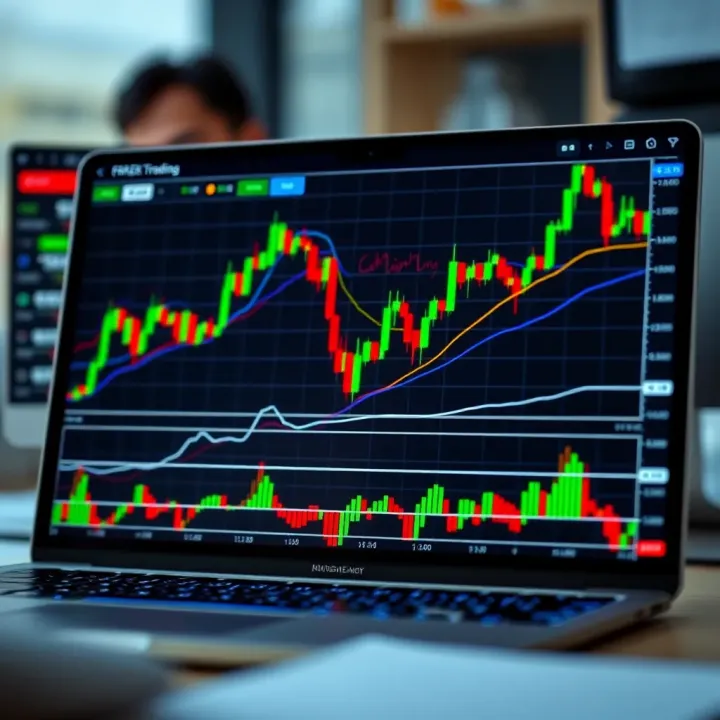
Understanding these basics sets a strong foundation. Knowing who trades, why they trade, and how market hours affect liquidity helps you make informed decisions rather than guessing.
This knowledge will prepare you for setting up your trading account and crafting strategies that suit market dynamics and Kenyan realities.
Setting up your forex trading account is the first real step from theory to practice. It's where you turn your interest in currency trading into action. Picking the right broker and understanding the account setup process can save you from unnecessary losses or delays later on. Kenyan traders often face specific challenges such as payment methods, regulation, and verifying their identities, so knowing these steps is key.
Regulation protects you against shady operators. In Kenya, brokers licensed by the Capital Markets Authority (CMA) are generally trustworthy. Globally recognised regulators like the Financial Conduct Authority (FCA) in the UK or the Australian Securities and Investments Commission (ASIC) also uphold high standards. Choosing a broker registered with a recognised regulator means there are rules they must follow, like segregating client funds and providing transparency.
This matters because forex is largely an unregulated market; unscrupulous brokers can freeze your funds or manipulate prices. For example, a Kenyan trader dealing with an unregulated offshore broker risks difficulties if disputes arise. Registered brokers offer a safer trading environment, even if their spreads or fees are slightly higher.
Beyond regulation, you must compare spreads – the difference between buying and selling prices. Lower spreads mean lower trading costs. Some brokers add commissions per trade, while others only charge spreads. For instance, a broker charging 1 pip spread with no commission might be cheaper than one with 0.5 pip spread plus KSh 100 commission per trade.
The trading platform is also crucial. Popular options include MetaTrader 4 and MetaTrader 5, which many Kenyan traders find user-friendly. Some brokers offer their proprietary platforms with additional features like integrated Kenyan Shilling accounts or automated trading.
Most brokers offer various account types tailored to different traders. Micro accounts allow trading small amounts, ideal for beginners, with minimum deposits as low as KSh 5,000. Standard accounts may require higher deposits but offer better spreads and tools.
Choosing the right account depends on your budget and goals. For example, if you're just testing strategies, a micro account with lower risk is better. Experienced traders might go for standard or VIP accounts with extra benefits.
Kenyan traders appreciate flexible funding options. M-Pesa is widely used for its convenience and speed. Many brokers now accept direct M-Pesa deposits or paybill numbers, which let you fund your account instantly from your phone.
Bank transfers remain popular for larger deposits but often take longer and may include bank charges. Credit/debit card payments are also common but watch out for foreign transaction fees. Always check the broker’s funding methods before registering.
Regulated brokers require identity verification to comply with Anti-Money Laundering (AML) laws. Usually, you'll need to submit a valid Kenyan ID or passport, proof of address like a utility bill, and sometimes proof of income.
This process can take a few days, but it’s necessary to protect your account and enable withdrawals. To avoid delays, prepare clear scans and ensure your documents are up to date.
Starting right with a reliable broker and clear account setup protects your capital and builds a strong foundation for your forex trading journey.
Understanding the basics and strategies of forex trading is vital for anyone keen on entering this market. These fundamentals equip you with the knowledge to make informed decisions and manage your trades effectively. Without a solid grasp of terms like pips, lots, leverage, and margin, or an understanding of key strategies such as trend following and range trading, you might quickly find yourself lost or, worse, risking your money unnecessarily.
Pips, lots, leverage, margin are the cornerstone terms in forex trading. A pip is the smallest price move that a currency pair can make — typically 0.0001 for most pairs. For instance, if the USD/KES pair moves from 108.5000 to 108.5100, that’s a 1 pip increase. Lots refer to the amount of currency you trade; the standard lot is 100,000 units of the base currency. However, as a beginner, you can trade mini or micro lots, which are easier to handle with smaller capital.
Leverage is a double-edged sword that lets you control a larger position with a small deposit, called margin. So, with 1:100 leverage, KSh 1,000 controls KSh 100,000 worth of currency. While this magnifies potential profits, it also increases risk, as losses multiply the same way. Kenyan traders should use leverage carefully, especially when trading volatile currencies.
Bid, ask, spread, and order types relate to how you buy or sell currencies. The bid is the price buyers are willing to pay, while the ask is the sellers’ price. The difference between these two is the spread, which acts like a cost or commission in the trade. For example, if USD/KES has a bid of 108.45 and an ask of 108.50, the spread is 0.05 – this cost must be overcome to make a profit.
Order types are instructions you give your broker about buying or selling. Market orders execute immediately at the current price, while limit orders set a specific price at which you want the trade to happen. Stop-loss orders help protect your capital by closing trades at predetermined loss points, crucial for risk management.
Trend following and breakout strategies capitalise on the market’s natural movement in one direction. If you spot a currency pair steadily rising, a trend-following strategy advises buying to ride the momentum. Breakout strategies, on the other hand, focus on moments when prices break through support or resistance levels, signalling possible strong moves. For example, if USD/UGX breaks above a resistance level it has struggled with for weeks, traders often buy assuming the price will keep climbing.
Range trading and support/resistance strategies work well when the market is stable without clear trends. Range traders buy at support – the lower price floor – and sell at resistance – the price ceiling. For instance, if GBP/KES keeps bouncing between 145.00 and 147.00 for days, buying near 145.00 and selling near 147.00 could yield reliable profits.
Using technical indicators effectively means applying tools like moving averages or the Relative Strength Index (RSI) to better time your trades. A moving average smooths out price data to highlight trends, while the RSI shows when a currency is overbought or oversold. Using these indicators together can help you anticipate reversals or confirm trends, rather than relying solely on gut feeling.
Mastering forex basics and strategies is the foundation for building your confidence and safeguarding your capital in the fast-moving forex market.
This firm foundation ensures that, whether you are trading from Nairobi or Mombasa, you navigate the market with more control and less guesswork.
Managing risks is at the heart of successful forex trading. Without properly handling risks, traders can easily lose their capital, which makes it impossible to stay in the market long term. This section highlights practical ways to safeguard your money and make measured decisions.
Why risk management matters
Forex trading involves a high degree of uncertainty. Currencies fluctuate for many reasons like economic reports, political events, or even unexpected news. If you don’t manage risk, a single bad trade can wipe out a significant portion of your account. Proper risk management keeps losses small and lets you live to trade another day. For example, setting a maximum loss per trade helps protect your capital, allowing you to keep trading without the stress of ruin.
Common risks for new traders
Most beginners fall into the trap of risking too much on one trade or using high leverage. This exposes them to big losses very fast. Another risk is overtrading—jumping into many positions without solid analysis hoping to make quick profits. New traders also struggle with emotional decision-making, which leads to poor entries and exits. Understanding these pitfalls early helps you avoid costly mistakes and develop discipline.
Stop-loss and take-profit orders
Stop-loss orders automatically close a trade when the price reaches a certain loss level. This is your safety net to limit losses in volatile markets. For example, if you buy the EUR/USD at 1.1000 and place a stop-loss at 1.0950, your loss is capped at 50 pips. Take-profit orders work similarly to secure profits when a target price hits, preventing the risk of giving gains back to the market. Using these orders allows you to plan your trade exit points clearly and prevents emotional reactions.
Position sizing and leverage control
How much you trade should depend on your account size and risk tolerance. Position sizing means choosing the right lot size so you do not risk more than a fixed percentage of your capital, commonly 1–2% per trade. High leverage amplifies both gains and losses. While it may tempt you to take bigger positions, controlling leverage protects your capital from large swings. For instance, risking KSh 100 per trade on a KSh 50,000 account is far safer than risking KSh 1,000 per trade.
Keeping emotions in check
Forex markets can be stressful, and emotions like fear or greed often drive bad decisions such as chasing losses or holding losing trades too long. Successful traders develop a disciplined mindset, following their trading plan without deviating for emotional reasons. Techniques to help control emotions include journaling trades, taking breaks, and setting realistic expectations. Remember, patience and self-control are just as important as technical skills in forex trading.
Proper risk management isn’t just a feature of trading; it’s what keeps you in the game. Protect your capital like it’s your life savings—because it effectively is when you trade forex.
By applying these risk management techniques, you build a strong foundation to trade forex sustainably, avoiding blows that can end your trading journey prematurely. Keeping your capital safe ensures you have the chance to grow steadily and learn from the market’s ups and downs.
Continuing education is essential for anyone keen on forex trading. The market shifts constantly with new economic events, geopolitical changes, and technological advances influencing price movements. Without ongoing learning, traders risk falling behind on strategies or misinterpreting market signals. This section highlights where you can find reliable forex learning materials suited to Kenyan traders and how practical experience through demo accounts bridges theory and real trading.
Recommended online courses and tutorials often serve as the quickest way to build foundational skills. Platforms like Coursera, Udemy, and specialised forex education sites offer structured courses covering everything from basic terms to advanced trading systems. For Kenyan traders, this means access to content that is often updated and interactive, with videos, quizzes, and downloadable materials. Many courses also discuss how global economic events affect currency pairs, equipping you with global insights relevant to the jittery forex market.
Local fintech hubs and brokerage firms sometimes run live webinars tailored to the Kenyan market conditions and regulations, which gives learners a chance to ask questions and get fresh insights. This combination of global and local perspectives makes online courses a smart starting point.
Books and guides suited to Kenyan traders provide a deeper dive in a more permanent form. Titles like "Currency Trading for Dummies" or "Forex for Ambitious Beginners" explain complex topics clearly. To capture local market nuances, Kenyan authors and financial experts may offer guides that explain the effect of local economic indicators, regulatory policies from the Capital Markets Authority (CMA), and even how to integrate M-Pesa and Kenyan banking systems into your trading routine.
Books can act as handy references whenever you're uncertain about concepts you encountered online or during trading. Adding a couple of well-chosen forex books to your desk can solidify your understanding over time.
Benefits of demo trading include the chance to practise without risking real money. Most brokers provide demo accounts that simulate real market conditions. This setup helps you understand order execution, chart reading, and managing leverage in a risk-free environment. It's particularly useful for beginners to try different strategies, learn how to place stop-loss orders, and experience the impact of market volatility without financial stress.
For example, a beginner might test how quickly to close trades when the market moves fast or how to use technical indicators like the RSI effectively. Demo trading builds confidence and familiarity, which can prevent costly mistakes when switching to live accounts.
How to transition from demo to live accounts requires patience and discipline. The psychological pressure of trading with real money differs significantly from practising on a demo. To make the switch smoother, start by trading small amounts on a live account. This helps manage emotions like fear and greed, which often impact decision-making.
Set clear rules before you move to live trading, such as maximum acceptable losses or profits per day, to keep your risk in check. Also, stick to strategies that proved successful in your demo sessions. Avoid the temptation to change your approach abruptly after switching to live trading because emotional pressure rises.
Starting your trading journey with proper education and steady practice lays the foundation to trade more confidently and securely, especially in a volatile market like forex.
Learn forex trading basics tailored for Kenyan traders 🇰🇪. Understand the currency market, key concepts, risks, and how to start trading confidently today 📈💰.

📚 Discover top forex trading books to boost your skills, from beginner to expert. Get trusted strategies, tips, and discipline insights for success!
Explore forex trading in Kenya with our detailed guide 🏦. Learn to pick the right brokers, understand regulations, and trade confidently in the local market 📊.
📈 New to forex trading? Discover key insights, practical tips, and risk management strategies designed to help beginners in Kenya trade confidently and wisely.
Based on 12 reviews