

Understanding How Binary Search Works
🔍 Learn how binary search works step-by-step, its uses, efficiency, and common mistakes to avoid. Perfect for deepening your computer science knowledge! 📚
Edited By
Sophie Whitman
A binary counter is a digital device used widely in electronics to keep track of the number of pulses or events. Unlike ordinary counters, it records counts in binary form, which means it represents numbers using only two digits: 0 and 1. This approach makes binary counters critical for computers, embedded systems, and timing devices where space and speed are important.
In practical terms, a binary counter can count up or down, depending on its design, and it advances its count with each clock pulse it receives. For instance, in a digital clock found in smartphones or smart meters used in Kenyan households, the internal circuitry often relies on binary counters to maintain accurate timing.
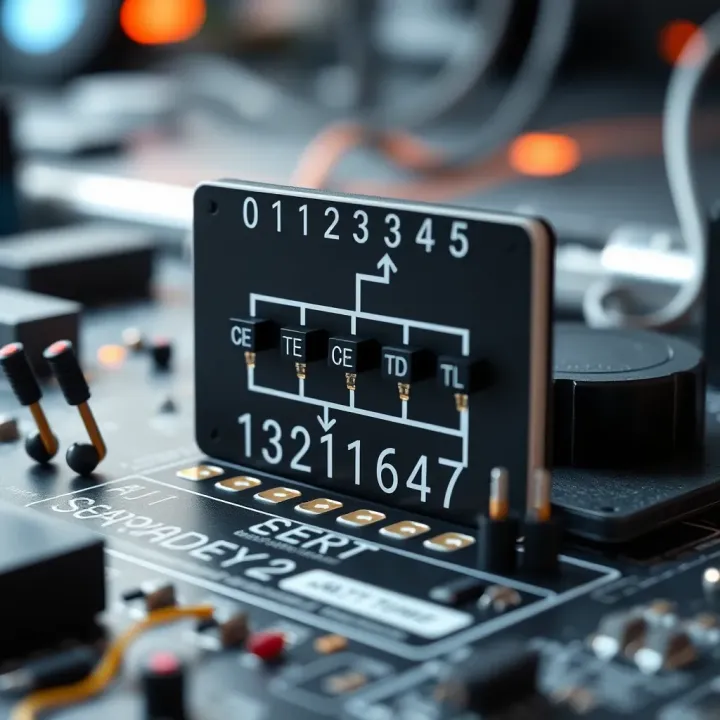
The core components of a binary counter usually include flip-flops, which are bistable circuits acting as memory cells. Each flip-flop holds one bit of data, and they are connected in sequence to form the full counter. When the clock signal pulses, the flip-flops toggle between states, thus changing the binary value stored.
Binary counters come in various types, such as ripple counters and synchronous counters. Ripple counters are simple and cheaper but slower due to delays caused by the cascading flip-flops. On the other hand, synchronous counters update all flip-flops simultaneously with a common clock signal, offering faster and more reliable operation.
In Kenyan tech settings, from simple digital scales in kiosks to more sophisticated smart metering systems, binary counters quietly handle the counting of pulses representing quantities or time, ensuring devices function smoothly.
Typical input signals to a binary counter include clock pulses, reset commands to start counting over, and enable signals which control whether the counter should respond to the clock. Understanding how these inputs affect the counter's behaviour helps in designing efficient circuits for specific functions, such as frequency division or event counting in sensors.
Binary counters count digital pulses in binary form.
Made up of flip-flops, they store bits in sequence.
Types include ripple (asynchronous) and synchronous counters.
Used extensively in timing and counting within digital devices.
Input signals like clock, reset, and enable control their operation.
Getting a good grasp of how binary counters operate is essential for anyone working in electronics, especially with growing practical applications in Kenya's tech space, from school projects to industrial automation. This knowledge lays a foundation for deeper exploration into digital systems and their vast possibilities.
Binary counters are vital components in digital electronics, handling the crucial task of counting events or pulses. By converting a sequence of input signals into binary numbers, they provide a systematic way to track quantities or measure time. You can think of them as the electronic equivalent of a notebook tallying marks, but much faster and more reliable.
A binary counter is an electronic device that counts pulses and represents the total as a binary number. Each pulse triggers a state change, effectively increasing or decreasing the count. This sequence provides a compact, easy-to-read way of keeping track of quantities that occur in a digital system. For instance, in a digital timer, every second pulse increases the counter, letting the circuit know how much time has passed.
Binary counters serve as the building blocks for many digital devices. They help manage timing, control events, and aid in arithmetic operations. In everyday digital gadgets, such as calculators or smartphones, they keep track of processes or data flow. Without counters, complex timing or counting tasks would require bulky and inefficient hardware.
One of the most common jobs for binary counters is timing—counting seconds, minutes, or other intervals. They divide the frequency of signals, slowing down a fast clock pulse to a manageable speed. In radio or telecom equipment, for example, counters help in frequency division to tune and stabilise signals. This makes them essential not only for telling time but also for making devices work properly across various frequencies.
Many everyday electronics rely on binary counters without us realising it. Digital clocks use them to keep track of time accurately. In the jua kali sector, workshop machines may use binary counters to control operating cycles or measure inputs like voltage and frequency. Even M-Pesa payment terminals and Safaricom base stations use counters internally to ensure correct transaction processing or data transmission.
> Understanding binary counters helps you appreciate how a series of small electronic signals translate into precise, reliable operations in devices you use daily.
By knowing what a binary counter is and why it matters, you grasp the foundation of how digital electronics handle counting and timing tasks effectively. This knowledge is especially handy for traders, investors, or analysts who deal with electronics stocks or technology sectors, enabling better insights into the products and technologies shaping markets today.
Digital systems rely on different kinds of binary counters, each designed for specific tasks. Understanding these types helps in choosing the right counter for a particular application, especially in settings where precision and efficiency matter. For instance, in trading terminals used for real-time data updates, the choice of counter type can affect processing speed and accuracy.
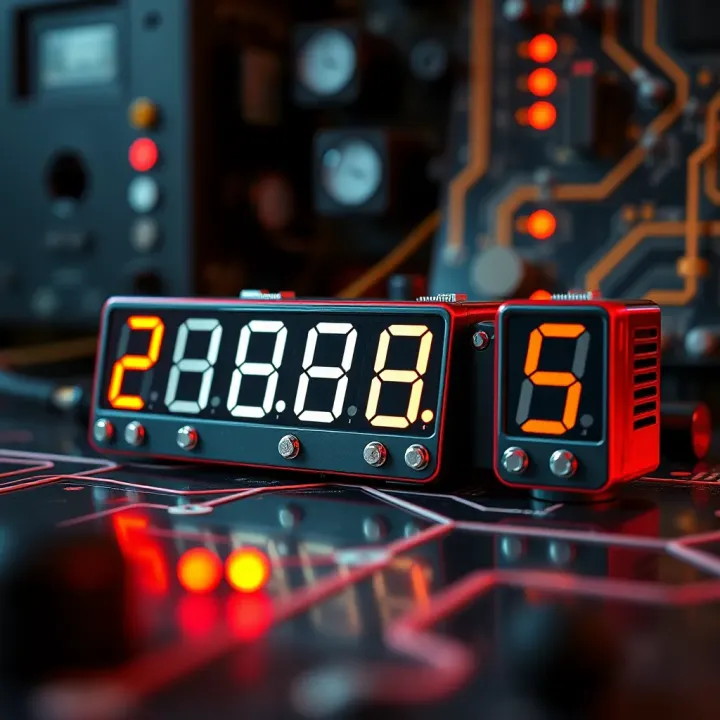
An asynchronous or ripple counter works by allowing each flip-flop to toggle based on the output of the previous one, not directly from a central clock. In other words, the clock input only triggers the first flip-flop, and the following flip-flops change state in a cascading pattern. This sequential flipping causes the output to “ripple” through the circuit, hence the name. For example, in older calculators or simple timing circuits, this type was quite common due to its straightforward design.
Ripple counters are simple but have a key weakness: propagation delay. Each flip-flop takes time to respond, so the toggling cascades with slight delays, which can cause timing errors or glitches in fast processes. This makes ripple counters less suitable for high-speed trading platforms or complex digital systems. However, their lower design complexity and power use make them a good fit for basic event counting in equipment like water meters or simple digital clocks.
Unlike ripple counters, synchronous counters clock all flip-flops at once with the same timing signal. This means their state changes occur simultaneously, eliminating the ripple effect and greatly reducing delay problems. The clock pulse is fed to every flip-flop simultaneously, improving timing precision. Such counters are preferred in digital equipment where timing must be precise, such as in stock price tickers or industrial process controllers used in Kenyan factories.
Synchronous counters offer faster, more reliable counting under demanding conditions. They avoid counting errors caused by signal delays and glitches. Although slightly more complex and power-consuming, their stability makes them ideal for applications involving heavy data volumes or where accurate timing is essential, such as in automated teller machines or network synchronization in telecom equipment.
Up counters increment the count value with each clock pulse, while down counters reduce it. Imagine a counter in a stock inventory system: an up counter tracks items added, and a down counter monitors items sold or removed. Up-down counters combine these functions, allowing the counting direction to switch based on control signals.
The ability to switch between counting up or down adds flexibility. Up-down counters find use in applications like bidirectional motor control, where reversing direction is common, or in financial systems where transactions both credit and debit accounts. In Kenyan jua kali workshops, for example, such counters might be incorporated into equipment that controls machinery movement or tracks input and output of materials.
Choosing the right type of binary counter can improve the accuracy and performance of digital systems, particularly in finance and industrial setups where both speed and reliability matter.
Understanding how a binary counter works step by step gives you a solid grasp of its role in electronics. It breaks down the process of counting digital pulses into manageable parts, making it easier to see how devices keep track of events or time. In financial systems or trading platforms, for example, binary counters can help manage transaction counts or timing intervals accurately.
The clock pulse acts like the heartbeat of a binary counter. Each tick signals the counter to move to the next state, enabling it to register a new count. In practical terms, devices without a reliable clock would miss or misread the number of events, leading to errors—imagine a security system losing track of how many times a sensor is triggered.
Input pulses are what the counter actually counts. Each pulse usually represents one event, such as a trade submission or a price tick in stock markets. As the input pulses come in, the counter increases or decreases its count accordingly. Proper timing between these pulses ensures the counter updates accurately rather than missing or double-counting an event.
Flip-flops are the building blocks inside a binary counter. Among the common types are JK, T, and D flip-flops, each designed for slightly different applications. For instance, T flip-flops toggle their output with each clock pulse, making them widely used in simple binary counters. JK flip-flops add flexibility by allowing set and reset conditions, useful when a precise count is needed.
When a clock pulse arrives, these flip-flops change states—turning from 0 to 1 or vice versa—depending on their design and input. This switching allows the counter to represent numbers in binary form. The way flip-flops chain together ensures each bit flips at the right moment, controlling the overall count progression.
A binary counter displays its count using bits—ones and zeros—just like a digital clock showing time. Each bit represents a power of two, with the least significant bit changing quickest. This structure helps electronic systems read and interpret the count rapidly and efficiently.
When the counter reaches its maximum value (for example, 1111 equals 15 in decimal on a 4-bit counter), it needs to overflow or reset to zero to start counting anew. This carry-over behaviour is vital for continuous operation and prevents errors in applications like timing signals or frequency division in market data collectors.
The efficient operation of binary counters in fluctuating environments like trading floors or telecom systems depends largely on how accurately they handle timing, state changes, and overflow, making their step-by-step operation key to their success.
Binary counters form a quiet backbone in many everyday and specialised Kenyan technologies. Their ability to count digital events accurately translates into better timing, control, and data processing for numerous devices used across the country. Understanding where and how binary counters fit helps local developers, hobbyists, and professionals appreciate their value.
Binary counters are the heart of most digital clocks and timers, devices widely found in Kenyan homes, offices, and public spaces. Counting seconds, minutes, and hours relies on these counters incrementing every time a clock pulse occurs, typically at a frequency of one hertz (one cycle per second). This process allows the clock to keep accurate time, dividing pulses to track larger units such as minutes and hours.
In Kenyan households, affordable digital wall clocks and kitchen timers commonly incorporate binary counters. These devices often rely on simple circuits that use counters to update the digital display. For example, a timer used in a market stall to track cooking times for nyama choma might rely on a binary counter-controlled timer circuit to alert the seller when meat is ready.
Telecom and broadcast equipment in Kenya depends heavily on precise frequency counting, where binary counters measure the number of signal cycles within a given period. This counting informs frequency modulators and signal processors used by companies handling radio, TV broadcasts, and mobile network towers, ensuring quality and stability.
In the jua kali sector, workshops often employ sensor data acquisition systems that include binary counters. A small-scale workshop making solar-powered devices might use counters to tally input from solar sensors, tracking energy generation or battery charge cycles. These counters enable affordable, reliable measurement without expensive digital instruments.
Binary counters offer simple but effective solutions in Kenyan settings where cost, reliability, and ease of repair matter just as much as technical precision.
This practical use ensures millions of devices, from digital clocks to telecom equipment, function smoothly, directly impacting everyday life and business in Kenya.
When deploying binary counters in electronic systems, especially in Kenyan-made gadgets or imported devices used locally, understanding their challenges is key to maintaining accuracy and efficiency. Two main concerns are timing errors linked to ripple counters and the balance between power consumption and performance.
Propagation delay refers to the time a signal takes to travel through a digital circuit component like a flip-flop. In ripple counters, each flip-flop’s output serves as the clock input for the next stage. This cascade means delays accumulate as the clock signal ripples through, causing slower overall response. For example, in cheaper or handmade digital clocks used in Nairobi markets, this delay can make the counter lag behind real time, affecting reliability.
Glitches are brief, unwanted pulses caused by asynchronous signal changes in ripple counters. Since ripple counters don’t clock all flip-flops simultaneously, intermediate states may appear momentarily, potentially miscounting signals. In real-world terms, a frequency counter on a local communication tower might miss pulses during glitch periods, giving incorrect frequency readings. This issue calls for careful circuit design or choosing synchronous counters where accuracy matters most.
Higher-speed binary counters generally consume more power, which matters in electronics running continuously, like digital timers in water pumps or street lighting controllers. Designers must weigh how fast counting needs to be against battery life or overall energy efficiency. For instance, a jua kali-designed irrigation timer might sacrifice some speed to ensure it runs longer on available power sources.
Battery-powered devices such as mobile phones, M-Pesa kiosks, or portable medical equipment rely on low power consumption to extend operating time. Counters with high switching frequencies drain batteries quicker, posing a challenge in rural areas with irregular electricity. Opting for low-power synchronous counters or adding power-saving modes ensures devices maintain functionality without frequent recharges or replacements.
Understanding these limitations helps engineers and hobbyists alike to make informed choices, ensuring binary counters deliver accurate and efficient performance in Kenyan technological applications.
In summary, timing errors like propagation delays and glitches affect counting accuracy, particularly in ripple counters. Power consumption concerns influence device design, especially for battery-run gadgets common in Kenya. Balancing these factors ensures binary counters work reliably across diverse local use cases.
🔍 Learn how binary search works step-by-step, its uses, efficiency, and common mistakes to avoid. Perfect for deepening your computer science knowledge! 📚

🔍 Learn how binary search works to quickly find items in sorted data. Explore its principles, coding tips, performance, and real-world uses.
💻 Learn how to convert decimal to binary manually and explore handy online converter tools. Understand binary's role in computing with clear examples!

Learn how binary data translates into readable text 🖥️! Explore code basics, conversion methods, encoding standards, and real-world computing uses.
Based on 5 reviews