
Top Books to Learn Forex Trading in Kenya
📚 Discover top forex trading books tailored for Kenyan traders! Learn key strategies, market tips, and how to avoid costly mistakes in forex trading. 💹
Edited By
Victoria Reed
Forex trading involves buying and selling currencies on a global market to make profits from price changes. It's one of the largest financial markets in the world, with daily trades exceeding $6 trillion. For someone in Kenya or elsewhere, learning forex trading isn't about guessing; it's about understanding how currencies move and using smart strategies.
Starting forex trading requires grasping the basics before you risk your hard-earned KSh. Unlike investing in shares or property, forex is highly liquid and operates 24 hours most days, which means opportunities come and go quickly. This flexibility is attractive but also risky without proper knowledge.
Remember, forex isn't a get-rich-quick scheme. Successful trading depends on discipline, education, and practice.
First off, you need to understand currency pairs like USD/KES or EUR/USD. Each pair tells you how much of the second currency you can get with one unit of the first. For example, if USD/KES is quoted at 110, that means 1 US dollar buys 110 Kenyan shillings. Knowing this helps you anticipate how economic news or events could shift exchange rates.
Next, a broker or trading platform is your gateway to the market. Look for regulated firms with transparent fees and good customer support. Popular platforms like MetaTrader 4 or 5 are widely used and offer tools to analyse charts and execute trades.
Managing risk is vital. Many new traders risk too much on one trade and get wiped out. A common rule is to risk no more than 1-2% of your capital per trade. Using stop-loss orders can limit losses when the market moves against you.
Learning forex step by step means starting small and focusing on:
Grasping basic forex terminology and market functions
Opening a demo account to practise without losing money
Understanding charts and technical indicators
Developing a simple trading strategy
Managing emotions and avoiding impulsive decisions
As you build your skills, keep a trading journal. Recording your trades, the reasons behind them, and the outcomes helps identify what works and what needs improvement.
By taking time to learn properly, you'll move from guessing rates to making informed trading choices that reflect your personal financial goals and risk tolerance.
This article will guide you through these critical steps in a clear and straightforward way, so you can start forex trading with confidence.
Before diving into forex trading, it's essential to get a grip on the basics. Without a solid foundation, traders often find themselves lost in confusing jargon or making costly mistakes. Understanding how forex works and learning key terms gives you practical control over your trades instead of leaving things to guesswork.
Forex trading, or foreign exchange trading, simply means buying and selling currencies. Unlike the stock market, forex operates 24 hours a day across global financial centres. For example, you might exchange US dollars for euros expecting the euro to strengthen. Profit comes from the price difference when you sell back at a higher rate. This market handles daily turnovers of over $6 trillion, making it the largest and most liquid financial market.
At the heart of forex trading are currency pairs like USD/KES or EUR/USD. The first currency is the "base," and the second is the "quote." If USD/KES is 110, it means one US dollar buys 110 Kenyan shillings. A "pip" stands for "percentage in point"—it's the smallest price move, often 0.0001 for most pairs. For instance, if EUR/USD moves from 1.1200 to 1.1201, that’s one pip.
Leverage is another crucial concept. It allows you to control a larger position with a smaller amount of capital. Say your broker offers 1:50 leverage; with KS0,000, you can trade up to KS00,000. While leverage can increase profits, it also magnifies losses, so managing it carefully is vital.
The forex market functions through a global network of banks, brokers, and traders. Prices fluctuate based on supply and demand, influenced by factors such as economic reports, political events, or central bank decisions. For example, if the Central Bank of Kenya raises interest rates, the Kenyan shilling might strengthen against other currencies.
Unlike stock exchanges, forex doesn't have a centralised location. Instead, trades happen electronically over-the-counter (OTC), meaning they occur directly between parties. This system allows continuous trading across different time zones—from Asia’s morning to Europe’s afternoon, then to America’s evening.
Understanding these basics helps you start trading with confidence and avoid common traps. Remember, forex is not a get-rich-quick scheme; solid knowledge ensures smarter, more informed decisions.
With this foundation, you'll be better prepared to explore the next steps, such as choosing a broker and practising with demo accounts.
Setting up properly before diving into forex trading is a vital step that can shape your experience and results. Without the right foundation, even the best strategies may fall flat. Setting up covers choosing a broker you can trust, practising on a demo account, and selecting the tools or platforms that suit your trading style. These elements work together like the chassis and engine of a car—they support and drive your trading journey.
Selecting the right forex broker is more than just picking any name you hear about. You want a broker regulated by reputable bodies like the Capital Markets Authority (CMA) in Kenya or other recognized agencies. A trustworthy broker offers transparent fees, fair spreads, and fast trade executions. For example, brokers like FXPesa or HotForex Kenya are popular locally because they comply with regulations and offer convenient deposit options like M-Pesa. Avoid brokers promising unrealistically high returns or those without clear contact details, as they can be risky.
Before risking real money, open a demo account with your chosen broker. This practice account simulates live market conditions without financial risk. Demo trading lets you test strategies, understand how platforms work, and get comfortable with order types like stop-loss and take-profit. For instance, if you want to try scalping or swing trading, a demo account helps you see how these play out in real-time. Practising here builds confidence and helps avoid common pitfalls when you move to live trading.
The right tools make trading more efficient and informed. Most brokers provide platforms like MetaTrader 4 or MetaTrader 5, which are standard for charting, analysis, and order execution. These platforms also offer indicators such as Relative Strength Index (RSI) and Moving Average Convergence Divergence (MACD), useful for technical analysis. Beyond the platform, traders benefit from economic calendars that track events influencing forex prices, such as Kenya’s inflation reports or US Federal Reserve meetings. Using tools like TradingView can also complement your insights with advanced charting and community ideas.
Starting well by setting up your broker, practising on a demo account, and using the right tools lays a strong foundation. This helps you trade smarter and avoids costly mistakes early on.
Organising these steps with care is essential to avoid pitfalls that many beginners face. Practical steps like picking a local-friendly broker with M-Pesa integration, testing on demo accounts, and mastering trading platforms will prepare you to take on live markets with greater confidence.
Mastering trading strategies and analysis is essential for anyone serious about forex trading. Without a solid grasp of these, trading becomes little more than guesswork, exposing you to unnecessary risks. When you understand how to analyse market moves and apply strategies, you dramatically improve your chances of making profitable decisions while managing your risks effectively.
Fundamental analysis involves studying economic, political, and social factors that influence currency prices. For instance, suppose the Central Bank of Kenya raises interest rates; this generally strengthens the Kenyan shilling because higher rates attract foreign investors seeking better returns. Traders who keep an eye on reports like GDP growth, inflation rates, or central bank announcements can anticipate currency movements better.
Fundamental analysis is about looking at the "why" behind market moves — it’s especially useful for longer-term trades.
Kenyan traders should track local and global news since events in the US or Eurozone often sway forex markets worldwide, including the Nairobi Securities Exchange (NSE) and forex pairs involving the Kenyan shilling.
Technical analysis uses charts and mathematical indicators to predict future price movements. This approach examines historical price patterns to find trends. Tools like moving averages, Relative Strength Index (RSI), and Bollinger Bands help you identify whether a currency pair is oversold, overbought, or trending.
For example, if the RSI of USD/KES dips below 30, it might signal the pair is oversold, potentially indicating a good entry point. Platforms like MetaTrader 4 or cTrader, popular in Kenya, offer these tools to analyse real-time charts and execute trades effectively.
Starting with simple strategies helps beginners build confidence without getting overwhelmed. Here are three straightforward approaches:
Trend Following: Buying when prices are rising and selling when they fall. For example, if GBP/USD is steadily climbing, you enter a buy trade and hold until momentum fades.
Breakout Trading: Watching for price movement beyond defined support or resistance levels. If EUR/USD breaks above a resistance line, it might continue upward.
Range Trading: When prices move between fixed support and resistance levels, traders buy at support and sell at resistance.
Combining these strategies with good risk management, such as setting stop-loss orders, can protect your capital while you learn.
In short, learning strategies and analysis equips you with tools to trade with purpose, not luck. Use fundamental analysis to understand what drives currencies and technical analysis to time your entries and exits. Together, they offer a solid foundation for anyone starting in forex trading.
Managing risks is the backbone of staying afloat in forex trading. Without a solid risk management plan, even the best strategies can lead to heavy losses. This section guides you on how to protect your capital while making consistent trades.
Stop-loss and take-profit orders are your safety nets in forex trading. A stop-loss order automatically closes your position if the price moves against you to a certain level. For example, if you buy the USD/KES pair at 110 and set a stop-loss at 108, your trade will close if the price falls to 108, preventing further loss. On the other hand, a take-profit order locks in your gains by selling once your target price is reached. Say you expect USD/KES to hit 115; setting a take-profit at 115 secures profit automatically without you watching the market nonstop.
Using these levels avoids emotional decisions and helps you stick to a plan. Remember to set them according to your analysis and the volatility of the currency pair. Tighter stop-losses might protect you more but could trigger early exits from normal price swings.
Knowing how much to trade per position is crucial. Position sizing means deciding the size of your trade based on your account balance and risk tolerance. A common rule is to risk only 1-2% of your trading capital on a single trade. For instance, if your account has KSh 50,000, you should risk no more than KSh 500 to KSh 1,000 per trade.
Good money management also involves diversifying trades and not putting all your money on one position or currency pair. This reduces the risk of losing everything if one trade goes wrong. Many Kenyan traders forget this and end up wiping accounts because they chased big wins without controlling risk.
Even experienced traders slip up with basic errors. Common mistakes include trading without a plan, overleveraging, ignoring stop-losses, and chasing losses. For example, some traders ramp up their leverage because they want bigger profits; however, leverage magnifies losses just as much. If not controlled, this can wipe out your capital quickly.
Another frequent error is emotional trading where fear or greed drives decisions instead of analysis. Following a well-structured risk management system helps curb these impulses. Always stick to your predetermined stop-loss and take-profit points without hesitation.
Consistent risk management is what separates successful traders from those who lose money. Protecting your capital allows you to stay in the game and learn from experience.
Understanding and applying these risk management practices will give you a clear edge and keep your trading journey sustainable. Take your time mastering these before increasing trade sizes or moving to live markets.
Forex trading demands more than just knowing how markets move; it's about cultivating strong discipline and continually improving your skills. Without these, even the best strategies can fail. Staying disciplined helps you stick to your plan, avoid emotional decisions, and manage risks wisely. Improving your skills ensures you adapt to changing market conditions and sharpen your trading edge.
Maintaining a trading journal is one of the most effective ways to build discipline and learn from your experiences. Write down details of every trade: entry and exit points, reasons for taking the trade, your emotions at the time, and the outcome. For example, if you notice you often panic and close trades too early during volatile times, a journal helps you identify this pattern and work on it. Over time, reviewing your journal reveals what works and what doesn't—turning mistakes into valuable lessons rather than costly repeats.
Trading is a dynamic activity; the markets evolve, and so should your knowledge. Stay updated with local and international financial news, join webinars, or attend workshops organised by Kenyan brokers or trading academies. Platforms like the Nairobi Securities Exchange (NSE) occasionally host sessions that shed light on market trends. Using local resources can also help you understand how global events affect the Kenyan shilling and regional economies.
Learning from experienced traders in local forums or social media groups can offer insights tied directly to Kenyan trading realities, such as the impact of CBK policies or East African trade agreements. This localized learning complements your global market understanding and helps you make more informed decisions.
Knowing when to transition from a demo account to live trading is critical. Only consider live trading after you consistently demonstrate profitability on your demo account over a period, say three to six months. You should also feel confident handling losses without panic or recklessness. For instance, if you've practiced risk management techniques like setting stop-loss orders and stick to them on demo, you are better prepared.
Start live trading with a small capital you can afford to lose. This helps you experience real market pressure while limiting financial risk. As you gain experience and control over emotions, you can gradually increase the amount you trade.
Discipline and constant learning form the backbone of successful forex trading. By tracking your trades, using local learning opportunities, and carefully timing your move to live trading, you build a strong foundation for long-term success.
Developing discipline and improving skills are ongoing efforts but vital if you want to turn trading into a dependable income source or investment avenue.
📚 Discover top forex trading books tailored for Kenyan traders! Learn key strategies, market tips, and how to avoid costly mistakes in forex trading. 💹

📚 Discover top forex trading books to boost your skills, from beginner to expert. Get trusted strategies, tips, and discipline insights for success!
Explore forex trading in Kenya with our detailed guide 🏦. Learn to pick the right brokers, understand regulations, and trade confidently in the local market 📊.
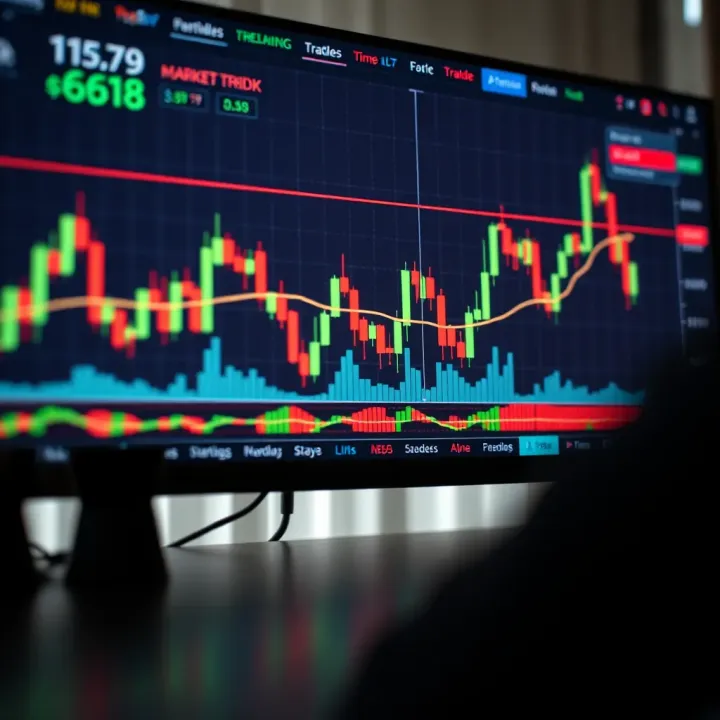
📈 New to forex trading? Discover key insights, practical tips, and risk management strategies designed to help beginners in Kenya trade confidently and wisely.
Based on 8 reviews