
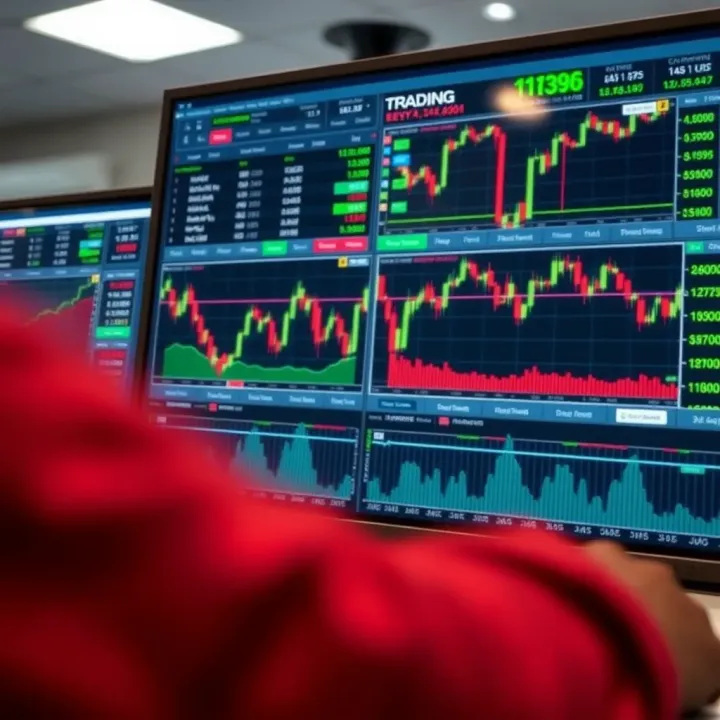
Guide to Forex Trading Companies in Kenya
Explore forex trading in Kenya with our detailed guide 🏦. Learn to pick the right brokers, understand regulations, and trade confidently in the local market 📊.
Edited By
Oliver Bennett
Forex trading, also known as foreign exchange trading, involves buying and selling currencies to profit from changes in their values. It's a global market that runs 24 hours on weekdays, with a daily trading volume exceeding US$6 trillion, making it the largest financial market worldwide. For someone in Kenya, forex trading opens doors to diversify investments beyond traditional stocks and bonds.
Getting started requires more than just access to a computer and internet. You need to understand how currency pairs work, what influences exchange rates, and the mechanisms behind trading platforms. For example, when you trade the USD/KES pair, you are betting on whether the US dollar will strengthen or weaken against the Kenyan shilling.
Choosing the right broker is a critical step. A good broker should be licensed by recognised authorities—such as the Capital Markets Authority (CMA) in Kenya or international regulators like the Financial Conduct Authority (FCA). This reduces the risk of scams and ensures your funds are secure. Popular brokers accessible to Kenyans include FXTM, HotForex, and IG, each offering different spreads, leverage, and trading tools.
Risk management cannot be overstated. Forex markets are volatile, implying your investment can swing widely in a short time. Tools like stop-loss orders limit losses by automatically closing a position when the price hits a certain level. Avoid chasing losses or using excessive leverage; simple, disciplined trading strategies usually perform better in the long run.
Beginners often overlook the importance of educating themselves thoroughly before risking real money. Practising on demo accounts provided by brokers helps build confidence without financial risk.
To sum up, starting forex trading in Kenya means:
Knowing key forex terms and how the market operates
Selecting a licensed, reputable broker with favourable trading conditions
Applying risk management techniques to protect your capital
Using demo accounts to sharpen your trading skills without pressure
This approach ensures you enter the forex market prepared, aware of the risks, and better equipped to make informed decisions.
This guide will take you through all these aspects step-by-step, giving you the tools needed to trade forex confidently and responsibly.
Grasping the fundamentals of forex trading is the first step for anyone who wants to enter the currency market with confidence. Without a clear understanding of what forex trading involves, even the best strategies can fail. This section breaks down the basics, helping you see how foreign exchange works and why it matters.
Forex trading, also called foreign exchange trading, means buying and selling currencies to profit from their price changes. Imagine you have KS0,000 and you expect the US dollar to strengthen against the Kenyan shilling. You might buy dollars now, hoping to sell later at a higher shilling value. Trading forex isn’t about owning physical money but about making deals electronically on a platform. Banks, companies, and individuals all join the market daily, making it the largest worldwide in terms of transaction volumes.
The forex market runs 24 hours a day from Monday morning in Asia to Friday evening in New York, shifting as business hours open around the globe. Kenyan traders often tune in during Nairobi’s working hours when both European and US markets overlap — this is when liquidity and volatility can be highest.
Forex trading happens in pairs; every trade involves exchanging one currency for another. The exchange rate you see reflects how much of the second currency you need to buy one unit of the first. These rates change constantly based on factors like economic data, political events, and market sentiment. For example, if Kenya’s inflation rises sharply, the shilling might weaken, affecting forex pricing.
The key thing to remember is forex isn’t about predicting markets perfectly but understanding how currency values shift based on global events and being ready to act quickly.
Major pairs are the most traded currency pairs and usually involve the US dollar. The main ones include USD/EUR, USD/JPY (Japanese yen), USD/GBP (British pound), and USD/CHF (Swiss franc). For Kenyan traders, USD/KES (Kenyan shilling) is critical, especially for local businesses or investors dealing in export or import.
Focusing on major pairs helps because they offer the best liquidity, meaning you can trade large amounts with tighter spreads — the cost difference between buying and selling prices. More liquidity generally means less risk of price manipulation and quicker trade executions. Minor and exotic pairs exist but often come with higher risks and costs due to lower trading volumes.
Understanding these basics prepares you to use trading platforms effectively, manage risks, and engage the forex market like a pro. Starting with a strong foundation will save you from costly mistakes later on.
Understanding key terms and concepts is essential for anyone serious about forex trading. These terms shape the language of the market and help you make informed decisions. Without grasping them, you risk confusion and costly mistakes. Let’s examine some fundamental elements that every beginner should know.
A pip (percentage in point) is the smallest price movement in a currency pair, usually the fourth decimal place. For example, if USD/KES moves from 110.2500 to 110.2550, that's a 0.5 pip change. Pips help traders measure gains or losses precisely.
Lots represent the standard trading volume. One standard lot is 100,000 units of a currency. Since this can be huge for beginners, many brokers offer mini lots (10,000 units) and micro lots (1,000 units). Choosing the right lot size helps manage risk effectively.
Leverage lets you control a large position with a smaller amount of your own money. If your broker offers 1:100 leverage, depositing KSh 10,000 lets you trade currencies worth KSh 1,000,000. But leverage cuts both ways; while it can boost profits, it multiplies losses too, so use it with caution.
The spread is the difference between the buy (ask) and sell (bid) price of a currency pair. Brokers charge this as the main cost of trading. Let’s say EUR/USD has a bid price of 1.1200 and ask price of 1.1203; the spread here is 3 pips.
Spreads can be fixed or variable. Fixed spreads remain constant regardless of market conditions, while variable spreads fluctuate with market liquidity. For Kenyan traders, spreads impact how quickly you can turn a profit, especially if you plan short-term trades.
Besides spreads, some brokers charge commissions or swap fees for holding positions overnight. Always check these costs before committing your funds. For instance, a broker might advertise zero commission but have wider spreads or higher swap rates, which can quietly eat into your returns.
Keep in mind: knowing your trading costs ensures you set realistic targets for profits and loss. It’s not just about price movements; it’s about managing expenses too.
Getting comfortable with these terms will give you a strong foundation to navigate the forex market confidently. Knowing exactly what pips, lots, leverage, and spreads mean helps you measure your risks and rewards clearly, preparing you to make smarter trades.
Choosing the right forex broker is a key step for any Kenyan trader starting out in forex. The broker acts as your bridge to the currency markets and determines the ease, safety, and cost-effectiveness of your trades. Picking a broker with the right features, strong regulation, and local accessibility helps you trade confidently without surprises.
Several factors matter when selecting a forex broker. First, check the trading platform they offer. It should be user-friendly, stable, and compatible with your device—most Kenyan traders use MetaTrader 4 or 5 due to their popularity and ease of use.
Next, consider spread costs and commissions. A tight spread means you pay less to enter and exit trades, making a big difference over time. Also, look at the leverage levels; while high leverage can boost gains, it also increases risk. Brokers offering leverage of up to 1:100 or 1:200 are common, but Kenyan traders should use this cautiously.
Deposit and withdrawal options are crucial. Your broker should support local payment methods like M-Pesa or M-Pesa Paybill, making funding and cashing out straightforward. Delays or high fees in transactions can eat into your profits.
Regulation protects traders from fraud or malpractice. In Kenya, brokers registered with the Capital Markets Authority (CMA Kenya) carry greater trust. CMA-regulated brokers must adhere to strict standards on client fund safety and fair trading practices.
Before depositing money, verify the broker’s regulatory status on official CMA websites or trusted financial watchdog platforms. Also, check if the broker segregates client funds from their operating accounts – this limits risk if the broker faces financial trouble.
Security measures like two-factor authentication and encryption are standard at reputable brokers. These help safeguard your trading account and personal information.
Trading through a regulated broker with strong security safeguards reduces the risk of losing your investment to fraud or mismanagement.
Several forex brokers cater well to Kenyan traders. Some well-known ones include:
HotForex: Known for low spreads, M-Pesa deposits, and CMA registration, making it a solid choice.
XM: Offers multiple trading platforms, local deposit options, and good educational resources.
FBS: Popular for flexible account types and accepting M-Pesa for funding.
Exness: Provides fast withdrawals and leverages up to 1:2000, but use leverage wisely.
Each broker has pros and cons, so compare their fees, platforms, and support before deciding. Testing their services with demo accounts helps you find what suits you best.
Choosing a broker wisely is the foundation for a smoother trading experience in the Kenyan forex market. Keep these factors in mind to avoid headaches down the line and focus on growing your skills and capital.
Getting started with actual forex trading involves several practical steps, each crucial to building your confidence and managing your investments well. Setting up your trading account and understanding how to place your first trades turn theoretical knowledge into real-world application. Without these foundations, even the best understanding of the forex market won't translate into successful trading.
The first task is to register with your chosen forex broker. This process usually involves filling out an online form with personal details such as your full name, email, Kenyan phone number, and sometimes national ID or passport information. Verification follows, where you submit scanned copies of your identity documents and proof of address, like a recent utility bill or bank statement. This step helps the broker comply with regulations and safeguards your account.
For example, if you open an account with a broker authorised by the Capital Markets Authority (CMA) or recognised international bodies, verification often takes one to three business days. Once done, you gain full access to trading, which keeps your account secure and trustworthy.
Once your account is verified, funding becomes your next priority. Most brokers now support local options convenient for Kenyan traders, such as M-Pesa, bank transfers, or even mobile wallets linked to Safaricom's Lipa Na M-Pesa. Some brokers accept payments directly from Kenyan banks like Equity or KCB, making the process straightforward.
When funding, pay attention to minimum deposit requirements. Brokers might ask for as little as KSh 1,000, which is ideal for beginners testing the waters. Also, confirm how fast your deposit reflects on the trading platform to avoid missing critical market moves.
Learning to navigate the trading platform is critical before placing actual trades. Platforms like MetaTrader 4 (MT4) or MetaTrader 5 (MT5) are popular and user-friendly for beginners. Start by familiarising yourself with price charts, which display currency pair movements over time.
Charts come in various styles—candlestick charts are the most common, showing open, high, low, and close prices for a given time frame. Practice spotting trends or patterns, such as an upward movement signalling a good buying opportunity. You can also add indicators like Moving Averages or Relative Strength Index (RSI) to guide your decisions.
Most platforms offer demo accounts that replicate real market conditions without risking real money. Taking time on a demo allows you to get comfortable with the interface and chart analysis.
Once you understand charts and feel confident, you can place your first trade. Buying (going long) means you expect the currency to rise, while selling (going short) bets on a price drop. Most platforms have clear buttons for ‘Buy’ and ‘Sell’ orders next to your selected currency pair.
Before placing an order, specify the lot size reflecting the trade amount. For example, trading 0.01 lots is a micro lot, suitable for small accounts. Also, use stop-loss and take-profit orders to automatically close trades and manage risk.
Starting to trade is less about rushing and more about mastering the tools. Taking deliberate, informed steps ensures you build a solid foundation to grow as a forex trader.
With your account registered, funded, and familiar with the platform, you can confidently place your first orders and start navigating the forex market like a pro.
Managing risk is the backbone of successful forex trading, especially for beginners. Without a proper risk strategy, even a few poor trades can quickly bust your account. For Kenyan traders, this takes on extra importance, as many start with limited capital and need to protect their funds wisely. Understanding how to control losses and lock in profits will help you stay in the game longer and improve your chances of making consistent gains.
Stop-loss and take-profit orders are essential tools to manage your risk. A stop-loss order automatically closes your trade when the price moves against you by a pre-decided amount. This prevents a small loss from turning into a crisis. For instance, if you buy EUR/USD at 1.1000 with a stop-loss at 1.0950, your maximum loss will be 50 pips. On the flip side, a take-profit order locks in gains by closing the position once the price hits your target. This stops greed from eating away your profits, something many beginners face when they ignore exits.
Setting these levels depends on your trading style and market volatility. For example, during Kenya's trading hours, pairs like USD/KES or EUR/USD may have different volatility patterns than during Asian sessions. Smart traders adjust their stop-loss and take-profit based on recent price swings, avoiding overly tight or too wide limits. One practical tip: never trade without planning your exit points.
Using a demo account is like learning to drive on an empty street—safe and pressure-free. It lets you familiarise yourself with forex platforms, practise order placement, and test strategies without risking real money. Many brokers accessible in Kenya offer free demo accounts. Take advantage by treating this environment seriously: set stop-loss, take-profit, and try different currency pairs.
Demo trading builds confidence and helps spot mistakes early. If you jump straight into live trading without trial, small errors—like misunderstanding leverage or spreads—can quickly erode your deposit. For instance, confusing lot sizes could lead to unintended exposure, a problem that becomes costly in real trading.
Jumping into forex without a plan is a common trap. Overtrading, chasing losses, and neglecting to manage risk cause many new traders to wipe out their accounts quickly. A Kenyan trader might be tempted by aggressive leverage featured by some brokers but fail to understand the risks. Using high leverage can amplify gains and losses, so start small.
Another mistake is ignoring news and economic events impacting currencies. For example, Central Bank of Kenya (CBK) announcements or US Federal Reserve rate decisions can move markets abruptly. Stay updated and avoid trading during highly volatile moments unless you’re experienced.
Lastly, emotional trading is a silent killer. Fear and greed push beginners to hold losing trades too long or exit winners too soon. Developing discipline through clear stop-loss and take-profit rules helps keep emotions in check.
Consistent forex success comes from controlling risks, practising thoroughly, and learning from mistakes. Set clear limits on every trade, use demo accounts diligently, and trade with your head, not your heart.
By mastering these risk management basics and steering clear of beginner pitfalls, you’ll build a solid foundation to trade forex confidently and sustainably in Kenya’s fast-growing market.
Explore forex trading in Kenya with our detailed guide 🏦. Learn to pick the right brokers, understand regulations, and trade confidently in the local market 📊.
📈 New to forex trading? Discover key insights, practical tips, and risk management strategies designed to help beginners in Kenya trade confidently and wisely.
Learn forex trading in Kenya 🌍 with a practical guide covering market basics, key terms, strategies, risk management, and local regulations to trade confidently.
Discover top forex trading books for Kenyan traders 📚 Learn strategies, risk management, analysis, and trading psychology to boost your skills and success!
Based on 8 reviews