
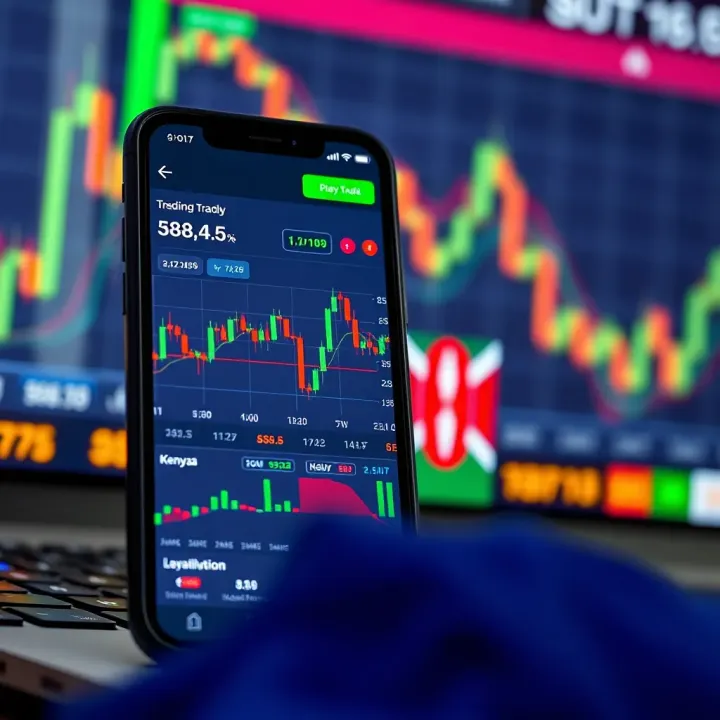
Best Forex Trading Apps for Kenyan Traders
Discover the best forex trading apps for Kenyan traders 📱 Compare features, learn risks, and get tips to trade smart and safe on mobile platforms in Kenya 🇰🇪
Edited By
Daniel Reed
Forex trading is the buying and selling of currencies on the global foreign exchange market. Unlike the stock market, forex operates 24 hours a day, five days a week, making it accessible for Kenyan investors at almost any time. This market moves trillions of shillings daily, driven by banks, governments, corporations, and individual traders.
At its core, forex trading is about speculating on currency price changes. For example, if you expect the US dollar (USD) to strengthen against the Kenyan shilling (KES), you would buy USD/KES currency pair. If the dollar rises in value, you can sell back the dollars at a profit. However, the reverse is also true — if the exchange rate moves against you, losses occur.
Kenyan investors should understand that forex is not a quick money machine but requires education, strategy, and risk management.
Banks and financial institutions: They handle the bulk of currency trades, ensuring liquidity.
Governments: Central banks and treasury departments influence currency policies.
Corporations: Businesses engaging in international trade hedge against currency risks.
Retail Investors: Individual traders using online platforms to participate.
This diversity makes the forex market highly liquid but also volatile.
Kenyan investors typically access the market through licensed brokers offering platforms with features like charting tools and indicators. You need to open an account—usually funded via bank transfer or M-Pesa—and use the broker’s software to trade.
It’s important to start with what is called a demo account to practice trading without risking your money. Once confident, you can shift to real trading with small amounts while learning to manage leverage and stop-loss orders.
Understand foreign exchange rates and factors affecting them such as economic indicators, political events, or central bank decisions.
Keep an eye on Kenya’s own forex regulations and ensure your broker complies with the Capital Markets Authority (CMA) guidelines.
Always be ready for sudden market movements; forex prices can be influenced by news affecting Kenya, like inflation or interest rate changes from the Central Bank of Kenya (CBK).
By grasping these basics, Kenyan investors can better navigate the forex market, reduce unnecessary risks, and potentially grow their investment portfolios with currency trading.
Forex trading, simply put, involves exchanging one currency for another while aiming to benefit from fluctuations in their value. For Kenyan investors, this market opens opportunities to diversify investments beyond local assets, taking advantage of global economic movements. Understanding forex trading is key before diving in, as it helps investors grasp how currencies move and which factors influence their price changes.
Forex trading means buying one currency and simultaneously selling another, usually in pairs like the US dollar against the euro (USD/EUR). The purpose is to profit from shifts in exchange rates driven by economic news, interest rates, or geopolitical events. For instance, if the Kenyan shilling weakens against the dollar, a trader holding dollars can benefit by exchanging back at a better rate.
This is different from typical stock trading because forex operates 24 hours daily across different time zones, offering flexibility for Kenyan traders who might want to operate outside regular market hours. It’s also highly liquid, meaning you can quickly enter or exit positions without struggling to find a buyer or seller.
The forex market is a global network rather than a single exchange. Transactions happen over-the-counter (OTC), mainly among banks, financial institutions, corporates, and retail traders connected through electronic platforms. This decentralisation ensures continuous trading from Sunday evening to Friday night (EAT, East Africa Time).
Kenyan investors usually participate via brokers who provide a trading platform linked to major liquidity providers like banks. These brokers offer access to currency pairs and tools for analysis. For example, during the day, you might focus on USD/KES due to local interest, while at night, you might look at USD/EUR or GBP/USD when European markets are active.
Currency pairs are grouped into major, minor, and exotic pairs. Majors are the most traded globally and involve the US dollar paired with currencies like the euro (EUR), British pound (GBP), Japanese yen (JPY), and Swiss franc (CHF). These pairs are popular due to high liquidity and tighter spreads, which reduce trading costs.
In Kenya, the USD/KES pair draws significant attention because it reflects the local currency’s strength and impacts everyday trade and imports. Traders also follow EUR/USD since Kenya imports many goods from the Eurozone. Understanding these pairs helps investors spot trends and react to global news such as interest rate changes by the US Federal Reserve or the European Central Bank.
The forex market is dynamic, responding quickly to real-world events. Grasping how it works and which currencies matter most sets Kenyan investors on the right path to making informed trading decisions.

By knowing what forex trading is all about, how the market operates, and which currency pairs matter, you build a strong foundation. This groundwork makes it easier to explore practical steps for participation and risk management later on.
Understanding who takes part in the forex market helps Kenyan investors grasp how currency trading affects the world and their wallets. The market is bustling with various players, each influencing price movements and liquidity in different ways. Let's break down the main participants and their roles.
Banks and financial institutions are the heavyweights of the forex market. These entities deal with vast sums as they manage currency exposure for themselves and their clients. For instance, a commercial bank in Nairobi might exchange dollars for shillings to facilitate imports or investments abroad. Such banks maintain liquidity, ensuring there's always currency available for trading.
International banks also engage in forex trading to profit from currency fluctuations. Their large volume trades influence exchange rates, often setting trends that smaller players follow. Moreover, these banks provide trading platforms and services to retail traders and brokers, acting as intermediaries.
Retail traders are individual investors, like many Kenyans who trade from their homes using platforms available on mobile or desktop. They operate on a smaller scale but add dynamism to the market. Retail brokers, often regulated locally or internationally, give these traders access to forex markets with leverage, allowing them to trade larger positions than their capital alone would permit.
A common example is a Kenyan retail trader using a broker's platform to speculate on the USD/KES pair. The broker earns through spreads or commissions, while the trader aims to profit from currency value changes. It's crucial for Kenyan traders to choose brokers regulated by trustworthy bodies to avoid fraud.
Central banks, like the Central Bank of Kenya (CBK), play a stabilising role in the forex market. They intervene to control excessive currency volatility and maintain economic stability. For example, if the shilling rapidly depreciates against the dollar, CBK might sell foreign currency reserves to support the local currency.
Regulators oversee market fairness and security. The Capital Markets Authority (CMA) in Kenya regulates brokers and trading platforms to protect investors from malpractice. Their role ensures the market remains transparent and that participants follow rules.
By understanding the distinctive roles of these key players, you can better interpret market signals, choose reliable brokers, and grasp how policy decisions impact forex prices. This knowledge is vital for anyone serious about trading forex in Kenya.
Understanding how forex trading operates day-to-day is key for Kenyan investors aiming to make informed decisions. Unlike buying shares or property, forex trading is about exchanging one currency for another, hoping to profit from changes in the exchange rates. This section focuses on three core areas: the basics of buying and selling currency, the impact of leverage, and the essentials of pips, spreads, and lots.
At its simplest, forex trading involves buying a currency you expect to strengthen against another. For example, if you anticipate the US dollar (USD) will rise versus the Kenyan shilling (KES), you might buy USD/KES. This means you buy dollars now at today's rate, hoping to sell them later at a higher rate. The reverse applies if you expect the shilling to gain strength.
Trades always occur in pairs since you are selling one currency to buy another. If you buy EUR/USD, you are buying euros while simultaneously selling US dollars. The market price shows how many units of the quote currency (second in the pair) you need to buy one unit of the base currency (first in the pair).
Leverage lets traders control larger positions with a smaller deposit, called margin. For instance, a leverage of 1:100 means you can trade KSh 100,000 with just KSh 1,000 in your account. This magnifies profits but also losses. If the market moves against you by 1%, your entire deposit could disappear quickly.
Kenyan brokers often offer leverage levels up to 1:200 or more. While this might seem attractive, using high leverage without proper risk management can wipe out your account faster than a matatu speeding in downtown Nairobi during rush hour. Always consider leverage as a double-edged sword and apply it cautiously.
A pip is the smallest price move in the forex market, typically 0.0001 for most currency pairs. It’s the basic unit used to measure profit or loss. For example, if USD/KES moves from 110.2500 to 110.2600, that’s a 1 pip increase.
The spread is the difference between the buying (bid) and selling (ask) price quoted by the broker. In a liquid pair like EUR/USD, spreads might be as low as 1 pip, but in less traded pairs involving the shilling, spreads can widen significantly, especially during low liquidity hours.
Lots standardise trade sizes. A standard lot is 100,000 units of the base currency; mini lots are 10,000; and micro lots are 1,000 units. For Kenyan traders starting small, micro lots offer a way to enter the market with lower risk, aligning well with modest capital budgets.
Remember, trading forex requires attention to these details; overlooking how pips, spreads, and lots interact can lead to unexpected costs or losses.
Grasping these fundamentals helps Kenyan investors approach forex trading with a clearer sense of how positions open, move, and influence your account balance in real terms. It also lays the foundation for more advanced topics like technical analysis and strategy development.
Starting forex trading in Kenya involves careful planning and understanding of the local market environment. For many Kenyan investors, forex trading offers a chance to diversify income sources, but it demands choosing the right tools, respecting regulatory requirements, and managing technical setups effectively.
Picking a trusted forex broker is the first step. A reliable broker ensures your funds are safe and offers fair trading conditions. In Kenya, brokers registered with the Capital Markets Authority (CMA) are generally safer options. Always check if the broker provides transparent pricing, easy deposit and withdrawal options (such as M-Pesa), and a user-friendly platform. For example, a broker like FXPesa combines local payment methods with solid global market access to serve Kenyan traders well.
Regulations matter because they protect traders from fraud and malpractice. Before signing up with any forex broker, verify their regulatory status through the CMA in Kenya or internationally recognised bodies like the Financial Conduct Authority (FCA) in the UK. Registering for forex trading typically involves submitting ID copies, proof of residence, and sometimes financial statements. This process helps in complying with anti-money laundering (AML) rules and tax requirements, ensuring your trading activity is official and legal.
Once registration is complete, setting up your trading account is next. Brokers often offer various account types with features tailored to different needs – from demo accounts for beginners to advanced ones with higher leverage and tighter spreads. Kenyan traders should start with demo accounts to familiarise themselves with trading platforms like MetaTrader 4 (MT4) or MetaTrader 5 (MT5), which are popular and widely supported. These platforms support multiple devices and provide tools for technical analysis and real-time market monitoring.
Starting forex trading without proper preparation is like driving without a map; choosing the right broker, understanding the rules, and mastering your trading platform are crucial steps to navigate the forex world confidently.
By following these steps, Kenyan investors can approach forex trading systematically, balancing opportunity with caution to build their trading journey on a solid foundation.
Understanding the risks and rewards of forex trading is vital for any Kenyan investor looking to enter this fast-moving market. While the potential to make profits is attractive, forex trading also carries significant challenges that can impact your investment. Being clear about these factors helps you trade smarter and avoid costly mistakes.
One of the main risks in forex trading is market volatility. Prices of currency pairs can swing wildly within minutes due to economic news, geopolitical events, or central bank decisions. For example, after a surprise interest rate change by the Central Bank of Kenya (CBK), the Kenyan shilling might fluctuate unpredictably against the US dollar, affecting open trades.
Another risk is leverage misuse. Although leverage increases buying power, it amplifies losses too. A small adverse move in the market can wipe out your account if you over-leverage. Traders also face liquidity risks during off-hours or unusual market conditions, where you might struggle to close positions at your desired price.
Lastly, emotional decisions like chasing losses or overtrading often lead to poor outcomes. Many beginner traders get carried away by the excitement and forget to control their risks.
Managing risk effectively is about protecting your capital while allowing room to grow your account. Start by using stop-loss orders to automatically close trades when losses hit a set limit. For example, if you buy EUR/USD at 1.1000, setting a stop-loss at 1.0950 limits your potential loss to 50 pips.
Diversification also helps. Don’t put all your money on one currency pair; spread your investments to reduce exposure. Besides, trading with proper position sizes that fit your total capital prevents devastating losses. For Kenyan traders, setting aside only a small portion of savings for forex trading ensures financial stability.
Besides technical tools, controlling emotions is critical. Keep a trading journal to learn from mistakes and develop discipline. Remember, not every trade will be a winner; patience and consistency are your allies.
Forex trading can offer attractive returns due to leverage and 24-hour market access. Some traders have turned small investments into substantial gains within months. For instance, a disciplined trader using sound strategies might double their capital over a year.
However, consistent profit requires skill, research, and experience. The market does not guarantee easy money. Losses are part of the game, and some days might drain your account if cautious steps aren’t taken. Additionally, Kenyan investors should consider forex trading costs, including spreads, commissions, and broker fees, which affect net profits.
Forex trading is not a quick scheme to wealth but an investment requiring risk awareness and smart planning.
By balancing potential profits with the risks involved and applying sound risk management strategies, Kenyan traders can build a forex trading practice that is both sustainable and rewarding. Avoid rushing into trades; instead, build knowledge progressively and always respect the market’s unpredictability.
Discover the best forex trading apps for Kenyan traders 📱 Compare features, learn risks, and get tips to trade smart and safe on mobile platforms in Kenya 🇰🇪
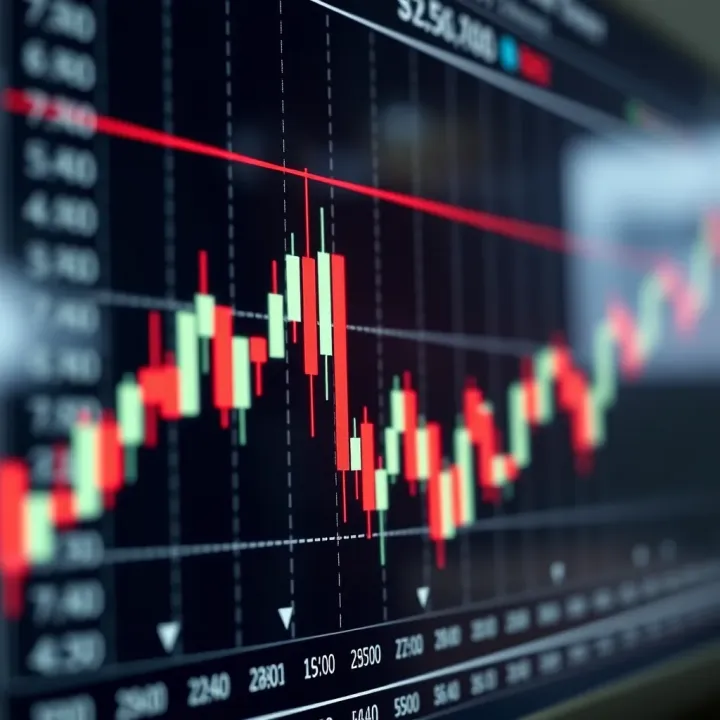
📈 Learn how to read candlestick patterns in forex trading to spot market moves, improve timing, and manage risks like a pro in Kenya's forex market.
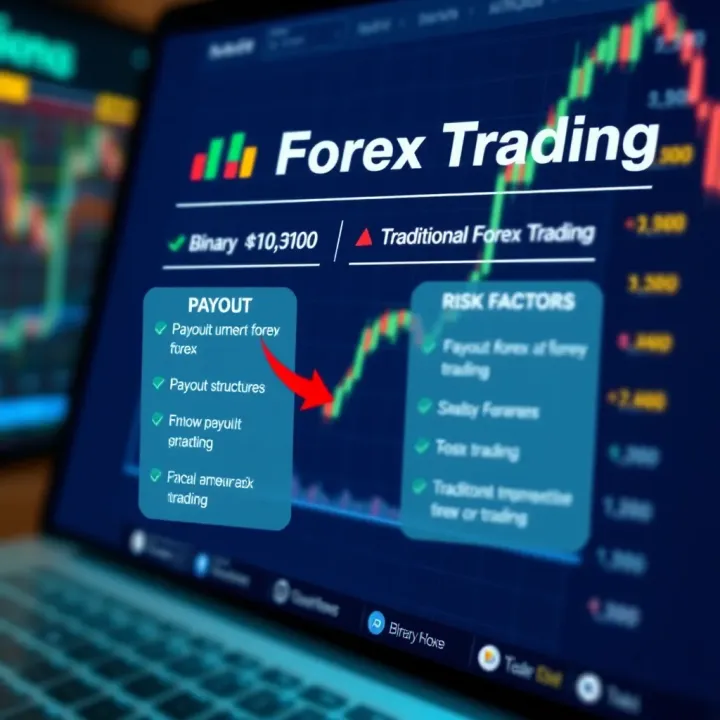
Explore binary forex trading basics, risks, and strategies designed for Kenyan traders 🇰🇪. Learn how it differs from traditional forex and trade wisely ⚖️📉💡
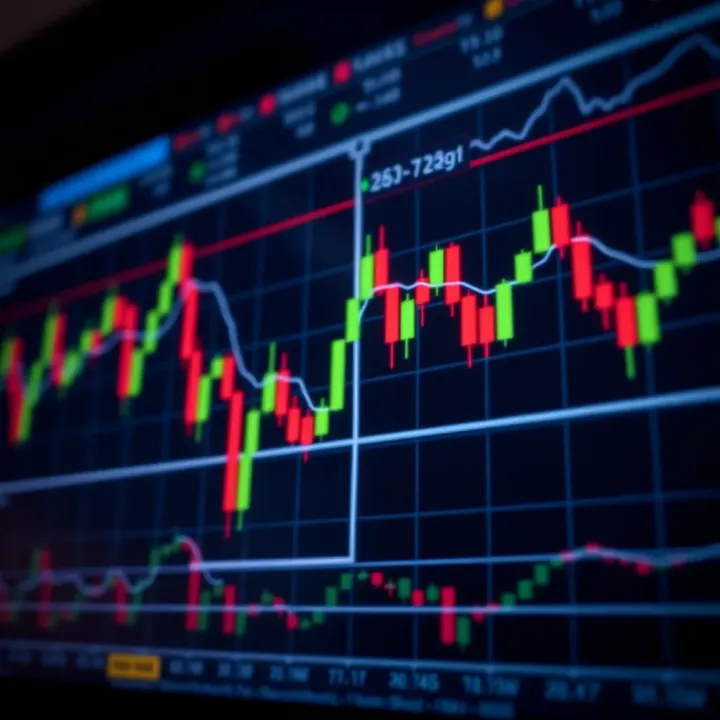
📈 Learn to spot key forex chart patterns that help predict market trends. Get practical tips & understand risks to make smarter trading moves in Kenya's forex market.
Based on 8 reviews