

Understanding Binary Tools and Their Uses
🔧 Explore binary tools: from file formats to editing, analysis, and programming. Learn how to pick and use them effectively in real-world tasks.
Edited By
Charlotte Mason
The LDP binary analyser is a specialised tool designed to decode and interpret Layered Data Protocols (LDP). It breaks down complex binary information embedded in network communications or software systems, helping professionals understand how data flows between various layers of an application or network.
At its core, the analyser converts raw binary data into readable formats, making it easier to identify structure, patterns, and anomalies. For instance, in financial trading platforms, where split-second data exchange matters, the analyser can highlight issues affecting transaction speed or data integrity.
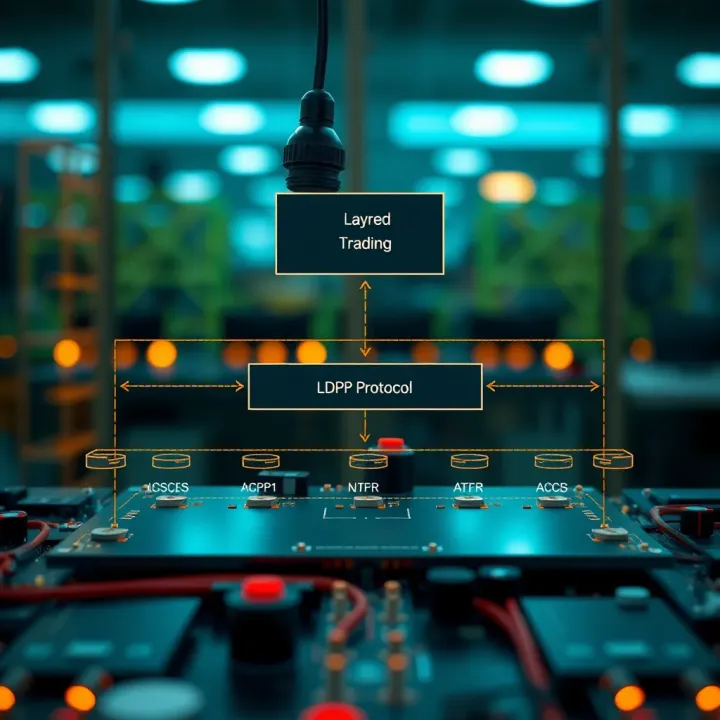
Unlike simple protocol checkers, the LDP binary analyser digs deep into encapsulated data layers. It reveals how each layer interacts, enabling traders, finance analysts, and software developers to pinpoint bottlenecks or security flaws quickly. Such insights are valuable when debugging complex systems or ensuring compliance with communication standards.
Understanding layered protocols through binary analysis can save time and costs by preempting system failures and facilitating smoother data exchanges.
Key functions of the analyser include:
Decoding multiple protocol layers: from physical layer binary streams up to application-level data.
Highlighting errors and inconsistencies in binary packets.
Extracting meaningful data fields for further analysis.
For a practical example, imagine a brokerage firm’s trading software encountering unexplained delays. Using the LDP binary analyser, technicians can trace the data stream to find where verification delays or malformed packets occur, enabling quick fixes.
Overall, the analyser is a useful asset for anyone working to maintain reliable, efficient software or network environments in financial or tech industries. It sheds light on often hidden data interactions and supports informed decision-making to improve system performance.
The LDP (Layered Data Protocol) Binary Analyser plays a key role in understanding complex data exchanges in modern communication and software systems. It breaks down raw binary data into manageable forms, enabling finance analysts, investors, and traders to verify data integrity, inspect transmission details, and detect errors early. For instance, a Kenyan fintech company may use this tool to ensure secure, accurate transaction recordings sent over mobile networks. This section covers the basics of the LDP Binary Analyser, highlighting what it is, why it matters, and how it fits into technology workflows.
At its core, the LDP Binary Analyser is software designed to interpret binary data structured under layered communication protocols. Its purpose is to convert obscure binary sequences into readable outputs, making it easier to evaluate data flows during network communications or software debugging. In real-world terms, this tool can help developers and data experts spot glitches in message formats or inconsistencies caused by network noise or device errors.
The analyser is crucial where data moves through multiple layers of protocols, such as application, transport, and network layers. It ensures each segment complies with standards and expected behaviours, which is vital in financial data transfers or network security checks.
Layered Data Protocols organise how data travels across networks by splitting communication into distinct levels, each handling specific tasks like data formatting, error checking, or routing. Think of the process like postal mail: one layer addresses the letter, another sorts items, and yet another handles the delivery.
In Kenyan digital infrastructure, layered protocols are the backbone for apps like M-Pesa and Safaricom’s voice and data services. They standardise communication, allowing devices and services to operate seamlessly despite diverse hardware or network conditions. Understanding these layers is key to debugging or enhancing such systems, which is where the LDP Binary Analyser steps in.
Binary data is the raw language computers use to communicate. Errors in this low-level data can cause transaction failures, broken connections, or security vulnerabilities, especially in sectors like finance and telecoms. Analysing binary content ensures systems behave as intended and can highlight unusual packet structures hinting at bugs or cyberattacks.
Analysers reveal detailed insights not visible through higher-level tools. For example, a trader monitoring data feeds from NSE might rely on binary analysis to confirm data timing and accuracy, preventing costly decision errors. This tool turns cryptic streams into meaningful diagnostics.
There are several practical uses for the LDP Binary Analyser, such as:
Debugging communication protocols in financial apps to ensure reliable M-Pesa integration.
Verifying sensor data integrity in IoT devices used in Kenyan agriculture or urban infrastructure.
Investigating network anomalies causing dropped calls or slow internet in Nairobi’s crowded matatu routes.
Each scenario benefits from early detection of issues within binary streams, allowing quick fixes and maintaining smooth service delivery. These tools are increasingly vital as digital interactions grow in complexity and scale across Kenya and beyond.
Proper binary analysis avoids costly downtime and strengthens trust in technology systems that many Kenyans depend on daily.

Understanding how the LDP binary analyser works is key to appreciating its role in parsing and interpreting layered data protocols. This section breaks down its main components and the process of converting raw binary data into usable information. For traders, investors, and finance professionals handling high-frequency data or networked trading platforms, knowing these mechanics can reveal how data integrity and communication reliability are maintained.
Data capture and parsing form the foundation of the analyser’s operation. Initially, the tool collects binary streams from various sources—these could be raw files, real-time network feeds, or stored protocol logs. Efficient capture ensures no bits are missed or corrupted. Parsing then breaks down this continuous stream into manageable segments in line with the LDP specification. Each segment represents a unit of data such as a header, payload, or control information.
This step is critical because the analyser must accurately identify boundaries and data types before meaningful interpretation. For example, in a forex trading platform using LDP for communication, missing a packet boundary could lead to misread price updates, risking incorrect investment decisions. Robust parsing ensures fidelity and sets the stage for deeper analysis.
When it comes to decoding binary sequences, the analyser translates raw binary digits (0s and 1s) into human-readable elements. This involves applying rules defined in the LDP specification, such as data field lengths, encoding methods, and checksum validation. Essentially, the tool converts the low-level bits into protocol messages or transaction instructions.
Consider a case where a banking system transmits encrypted transaction details using LDP. Decoding these binaries correctly means extracting accurate account numbers, transaction amounts, and timestamps. A failure in decoding could disrupt audit trails or trigger false alerts. The binary analyser thus acts as a translator between machine-level data and understandable protocol commands.
Turning raw binary into readable format is the next crucial step. After decoding, the analyser presents data in forms familiar to users—such as hexadecimal dumps, structured tables, or simplified message logs. This output helps financial analysts or network engineers verify the actual content quickly.
For example, a network team monitoring stock exchange feeds might see a sudden spike in error flags through the analyser's output. They can then narrow down the issue to a specific data block rather than guessing through extensive code or raw binary dumps. This clarity saves time and reinforces confidence in system performance.
Detecting patterns and anomalies rounds up the process. The analyser scans the interpreted data for irregular patterns like unexpected values, missing sequences, or corrupted checksums. Identifying these anomalies early can prevent costly errors or data breaches.
In a Kenyan fintech firm, such early detection might flag disrupted mobile payment requests, helping the support team act before customers experience failures. By highlighting these patterns automatically, the LDP binary analyser supports proactive monitoring and debugging.
A well-tuned binary analyser doesn't just decode data—it empowers you to spot problems before they escalate, a vital edge in finance and network operations.
Together, these components and processes ensure the LDP binary analyser delivers reliable, clear insights into complex data flows, making it an essential tool for anyone working with layered data protocols in Kenya's growing digital economy.
Getting hands-on with the LDP Binary Analyser is where theory meets practice. This section guides you through setting up and running the tool to decode layered data protocols efficiently. Mastering these practical steps is essential, especially for developers, analysts, or traders who rely on accurate data interpretation for decision-making.
Before you start, make sure your system meets the analyser’s specifications. Typically, the software demands a stable operating system like Windows 10 or Linux, at least 8GB of RAM, and a decent processor to handle intensive parsing tasks. For example, if you’re analysing large binary streams from financial systems or communication networks, insufficient memory will lead to lag or crashes.
Installation usually involves downloading the software package from the official distributor and following a straightforward installation wizard. On some platforms, command-line installation is preferred by tech-savvy users. Ensuring the software is up to date guarantees compatibility with the latest LDP versions and bug fixes.
The analyser needs clear instructions on where to pull data from. Input sources vary—some users work with saved binary files, while others tap into live data streams from network interfaces or devices. Configuring these inputs correctly is critical to avoid incomplete or corrupted data.
For instance, in fintech, you might set the analyser to capture live transactional data from a secure socket connection, ensuring real-time protocol monitoring. Alternatively, network engineers might load files saved during traffic captures for detailed offline analysis. The key is to specify precise paths, protocols, and buffer sizes fitting your data source.
With the setup ready, load your binary data into the analyser. For files, this usually means browsing to the saved file location and importing it. For live streams, establishing stable connectivity and selecting the correct data feed is necessary.
Imagine a telecom technician inspecting packet flows during peak hours—having a smooth loading process reduces downtime and speeds up troubleshooting. The analyser may also support batch loading, useful for comparing multiple sessions side by side.
Once loaded, the analyser decodes the raw binary data into readable formats like hexadecimal views or structured protocol layers. Interpreting these results correctly is vital. Pay attention to error flags or warnings that might signal misconfigurations or corrupted packets.
For example, a trader monitoring real-time market feeds can spot anomalies that suggest data delays or transmission errors affecting trading algorithms. Knowing how to read these signs helps in quicker response and maintaining data integrity.
Proper use of the LDP Binary Analyser involves not just running it but understanding what the decoded data means to your specific context—be it network security or financial data flows.
Organising your workflow around setup, loading, and interpretation ensures you’ll make the most of this powerful tool.
Interpreting results derived from the LDP binary analyser is a key step that determines how effectively one can make sense of raw binary data and translate it into meaningful information. For traders, investors, and finance analysts dealing with layered data protocols, clear output interpretation helps in spotting patterns and anomalies that could impact system performance or security. At the same time, handling challenges such as ambiguous data or errors is crucial to avoid wrong conclusions or unnecessary troubleshooting.
Hexadecimal and binary views offer different lenses for examining data. Binary view shows the raw bits—zeros and ones—that represent the data at its most fundamental level. This view is useful for deep technical analysis when you need to track exact bit-level changes, especially in software debugging or network packet inspection. Hexadecimal (hex) view, on the other hand, condenses these bits into a more readable format using base-16 numbers. Since each hex digit represents four bits, reading large data sets becomes quicker and less error-prone. For example, when monitoring transaction flows in fintech systems, hex view enables developers and analysts to quickly spot suspicious or malformed data segments.
Error flags and warnings form an essential part of the analyser’s output. These signals highlight where the data does not conform to expected patterns or protocols. For instance, if an error flag is raised indicating checksum failure, it hints that the transmitted data may be corrupted or incomplete. Warnings might point out deprecated protocol usage or unexpected field lengths. Understanding these signals helps technical teams prioritise issues needing immediate attention instead of sifting blindly through the entire data stream. In practice, a warning about timing mismatches in data packets might prompt network engineers to check for latency problems rather than device faults.
Incomplete data problems occur when the analyser receives partial or truncated data streams. This often results from network interruptions or logging misconfigurations. The output may show missing sections or abrupt ends, making it difficult to follow the full communication sequence. For example, a stock trading platform receiving incomplete order packets could lead to order mismatches or delayed executions. Identifying this early through the analyser’s feedback allows IT staff to focus on improving data capture methods or network stability.
Misinterpretations and false positives arise when the analyser incorrectly flags normal variations as errors or anomalies. This might happen if protocols evolve but the analyser’s settings remain outdated, or if noise in the data is mistaken for malicious activity. Such misinterpretations waste valuable time investigating harmless issues. For instance, a warning simulating an invalid header might just be a new protocol extension not yet recognised by the tool. To avoid this, regular updates and proper configuration of the analyser are necessary. Cross-checking output with known protocol specifications and using complementary tools can reduce these false alarms.
Successful results interpretation demands both technical understanding and practical experience. Addressing challenges early minimises downtime and sharpens insight into layered data communications.
By mastering these outputs and troubleshooting strategies, Kenyan finance and tech professionals can better ensure smooth operations and maintain confidence in their data-driven decisions.
Using the LDP Binary Analyser has become vital for sectors that rely heavily on layered data protocols. Its ability to decode binary data streams helps uncover hidden issues in communication and ensures reliable data handling. In Kenya, where digital services continue to expand rapidly, this tool plays a significant role in supporting technology infrastructure both locally and internationally.
Debugging communication protocols is one of the primary uses of the LDP Binary Analyser. In software development, communication protocols govern how data packets move between systems. When these protocols fail or behave unexpectedly, problems like dropped messages or delays arise. The analyser helps developers identify problems in the binary data streams by translating complex binary code into a more understandable format. For instance, fintech firms in Nairobi dealing with mobile payments can spot where data transfer is failing between their app servers and the M-Pesa platform, ensuring smoother transaction flows.
In network monitoring, the analyser enables engineers to monitor real-time data traffic and catch glitches before they escalate. This proactive debugging reduces downtime and keeps services running effectively.
Ensuring data integrity in transmissions is another critical application. Networks often carry sensitive information where even minor data corruption can cause major issues – consider a banking transaction where a single bit flipping could lead to financial errors. The LDP Binary Analyser checks the binary sequences for discrepancies or anomalies, flagging corrupted packets immediately. Kenyan telecom companies like Safaricom rely on such tools to maintain strong data integrity, particularly over vast and sometimes unreliable network lines.
Moreover, the tool helps verify that encryption and encoding schemes within protocols are correctly implemented, preventing security breaches and data loss.
The growth of fintech and telecom industries in Kenya presents ample opportunities for applying LDP Binary Analyser technology. Fintech startups constantly develop complex apps involving layered data exchanges—mobile lending platforms, insurance apps, and peer-to-peer payment systems—to name a few. Being able to analyse and debug these data flows makes these platforms more resilient and trustworthy.
Similarly, the telecom sector’s expansion—rolling out 5G networks and IoT solutions—requires reliable protocol analysis to prevent downtime and network failures. The analyser’s role here ensures that data transmissions meet quality standards, directly affecting customer satisfaction.
Training and skills development form another key opportunity. As demand for skilled engineers who understand layered data protocols increases, institutions can include hands-on experience with the LDP Binary Analyser in their curriculum. This practical exposure prepares students and professionals to handle real-world network and software challenges more effectively.
Kenyan universities and technical colleges integrating such tools into their programmes will bolster the tech labour market, reducing the skills gap. Additionally, workshops and training sessions offered by industry players help practising engineers stay updated on the latest analysis techniques.
The LDP Binary Analyser is more than just a tool; it’s a critical asset for enhancing network reliability, software performance, and the overall growth of Kenya's digital economy.
🔧 Explore binary tools: from file formats to editing, analysis, and programming. Learn how to pick and use them effectively in real-world tasks.
Explore binary tools and their functions in software, security, and data. Learn how to read, manipulate, and choose the right tools for your tech needs 🔧💻🔍

🤖 Explore binary division concepts, its difference from decimal, manual and programming methods, key algorithms and real-world computing examples.

🔍 Explore binary analyzers: tools, techniques, and uses in cybersecurity & software. Learn features, challenges, and tips for effective analysis in Kenya.
Based on 12 reviews