
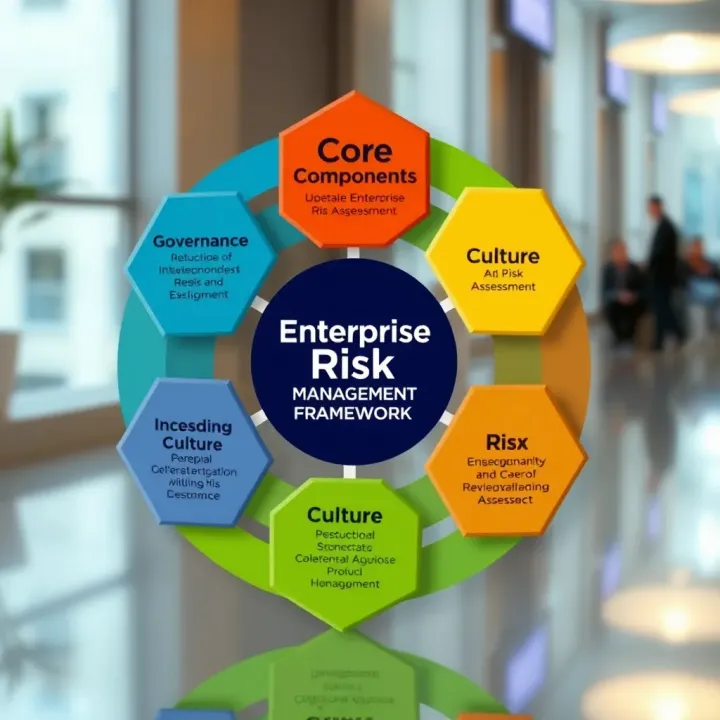
Understanding Enterprise Risk Management
Explore how enterprise risk management frameworks help Kenyan businesses spot and handle risks daily, focusing on culture, governance, and key steps 🛡️📊
Edited By
Sophie Whitman
Risk management is about spotting potential problems before they lead to losses and putting steps in place to handle them. Whether you're a trader watching the NSE or an investor managing a portfolio, understanding this process is key to protecting your money and making confident decisions.
At its core, risk management involves several clear steps: identifying risks, evaluating how serious they are, acting to reduce them, and keeping track to make sure your strategies work. Each step feeds into the next, creating a cycle of ongoing protection.
Organisations might face risks like market shifts, credit defaults, or operational hiccups. For instance, a broker might identify that fluctuations in forex rates affect their trades. They then assess the impact and likelihood to decide how much attention it deserves.
Good risk management isn’t about avoiding all risks—it's about knowing which risks to take and how to prepare for the unexpected.
Risk Identification – This involves listing out anything that could go wrong. A finance analyst might spot risks by reviewing market reports, client data, or regulatory changes.
Risk Assessment – Here, you rank risks by their chance of happening and the potential damage. Tools like risk matrices help visualise which threats need urgent attention.
Risk Response Planning – Once risks are assessed, you draw up plans to avoid, reduce, or share the risk. For example, a trader could use stop-loss orders to limit losses, or an investor might diversify holdings across sectors.
Implementation – This is putting your plans into action. It might mean adjusting investment strategies or updating compliance procedures.
Monitoring and Review – Risks and markets change fast. Regularly checking whether your measures work and revising them is critical, especially in Kenya’s dynamic economy.
Understanding and applying these steps helps traders and investors minimise losses and improve returns. Each step builds a stronger safety net, keeping you ahead in unpredictable environments.
This practical approach means you're not just reacting to risks, but managing them smartly to protect your financial interests over time.
Starting with risk management is about understanding what risks you face, how they affect you, and why it matters to address them early. For traders, investors, and finance analysts, this step sets the foundation for making informed decisions and protecting your capital or business from unexpected losses. For example, a stock trader might recognise volatile markets as a risk, while a broker could consider regulatory changes that impact client portfolios.
Risk refers to the chance that something unwanted will happen, leading to loss or harm. In finance, this could mean losing money on an investment, encountering market volatility, or dealing with delays in transactions. The impact of risk varies—it might be a small drop in profit or a major financial setback. Consider a Kenyan business importing goods: currency fluctuations between the Kenyan Shilling and the US dollar pose a risk that could increase costs unexpectedly. Understanding risk means quantifying how likely these events are and how much harm they can cause.
Managing risk is necessary to keep your operations or investments safe and sustainable. Without a clear view and plan, you might suffer losses that could have been avoided or mitigated. Effective risk management helps you plan for uncertainties and make better decisions. For example, an investor who uses stop-loss orders can limit losses when the market swings wildly. In the same way, companies that regularly assess their supply chain risks avoid disruptions that could halt production.
Getting started with risk management gives you the power to respond quickly instead of reacting too late when problems arise.
When you take time to properly define and understand risks, you create a clearer picture of your vulnerabilities. This clarity guides prioritisation—allowing you to focus on the threats that could cause the most damage. For traders with limited capital, recognising the biggest risks helps avoid placing big bets on unsafe assets. For students learning finance, grasping risk concepts early enables sharper analysis in their exams and future work.
Overall, getting started with risk management builds confidence and control. It’s the first step to turning uncertain situations into manageable ones, using practical examples relevant to day-to-day finance, trading, or business activities in Kenya and beyond.
Spotting potential risks before they surface is a critical step in managing uncertainty effectively. By identifying risks early, traders, investors, and finance analysts can act proactively to reduce losses or seize opportunities. In practical terms, this means not waiting until a crisis hits but recognising warning signs that might otherwise go unnoticed.
Before you can plan safeguards, you need to understand where risks often come from. In Kenyan markets, for example, financial risks might arise from currency fluctuations, unexpected regulatory changes, or political instability during election periods. Business risks could come from supply chain disruptions, such as fuel shortages affecting transport costs, or from technological failures like system outages in mobile money platforms like M-Pesa.
Environmental factors too—think drought affecting agricultural investments or floods disrupting infrastructure—play a role. Even social changes, such as shifting consumer preferences or workforce strikes, can present risks. Recognising these diverse sources is key to avoiding surprises and preparing solid responses.
Early risk detection often relies on a mix of methods tailored to your sector and situation. First, regular market analysis and trend monitoring help catch shifts in economic indicators, such as inflation rates or foreign exchange movements impacting investments. For example, an investor in tea exports might track rainfall patterns and government export policies to anticipate challenges.
Engaging stakeholders across your operation provides ground-level insights. Kenya’s jua kali artisans, for instance, often sense supply shortages before official reports. Using tools like SWOT analysis (Strengths, Weaknesses, Opportunities, Threats) also helps highlight vulnerabilities. Additionally, scenario planning permits exploring possible futures to understand potential risks before they become reality.
Technology can support too, with data analytics and early warning systems detecting shifts faster. Still, nothing replaces experience and local knowledge, especially in volatile environments.
Identifying risks before they happen isn't about guessing the future but preparing for it based on clear signs and informed judgement.
By combining careful observation and practical tools, you build resilience against unexpected shocks. This proactive stance makes the difference between weathering storms and facing costly surprises down the road.
Assessing risks is the step where theory meets reality. You need to measure and understand each risk's chance of happening and the damage it could cause. This practical approach helps traders, investors, and finance analysts decide which risks require urgent attention and resources. For example, a forex trader might recognise that political unrest in a country increases currency volatility. By estimating how likely unrest is and how sharply it might affect the shilling, they can plan their trades better.
The first part of risk assessment is estimating the likelihood, or probability, of an event occurring. This isn’t guesswork but involves analysing historical data, current trends, and market signals. If a stock typically swings sharply before earnings reports, its price jump or fall is quite likely around that time. On the flip side, consequences refer to the impact if the risk materialises—think of it as the size of the damage. A sudden change in foreign exchange rates could wipe out an investor’s profit if the position is large, while a similar move in a minor holding might be tolerable.
Quantifying likelihood and consequences lets you craft a risk profile. This is often done using a risk matrix — a table where one axis shows likelihood from rare to frequent, and the other axis shows impact from low to severe. In practice, say an investor rates a particular market crash as unlikely but with very severe consequences; this risk must still be taken seriously, even if it seems remote.
Not all risks are equal. Once you have your risk profile, the next step is to rank them. Which risks deserve immediate action, and which should be monitored but can wait? Prioritisation depends on factors like your risk appetite, the scale of possible loss, and resource availability.
For instance, a broker might face risks from both regulatory changes and currency fluctuations. If the regulator signals an upcoming amendment with immediate effect, that risk becomes a priority due to its certainty and potential to disrupt business. Meanwhile, currency risks might be less urgent but still important.
Assessing and prioritising risks lets you focus your resources where they matter most. This approach avoids chasing every small risk and keeps your strategy efficient and resilient.
To assist prioritisation, use tools such as risk scoring and categorisation by severity. You can then allocate risk controls like insurance, hedging, or contingency plans accordingly. By breaking down risks into measurable parts, you turn uncertainty into manageable chunks, giving you a clearer path to safer investment and trading decisions.
Planning how to handle risks is a key stage in risk management. After you identify and assess risks, deciding on practical ways to manage them ensures that potential problems don’t catch you off guard. In trading or investing, for example, this could mean setting stop-loss orders to limit financial loss if a market move goes against you. Without a clear plan, organisations and individuals often react too late or take ineffective measures.
There are several ways to treat risks, and picking the right option depends on the risk’s nature and your capacity. Four main approaches are:
Avoidance: Skipping activities that expose you to unacceptable risks. For instance, a broker might avoid trading highly volatile stocks during a political crisis to prevent huge losses.
Reduction: Taking steps to lower the likelihood or impact of a risk. Investors might diversify their portfolio to reduce exposure to any single asset.
Transfer: Shifting risk to someone else, like using insurance or outsourcing certain processes. A company might insure its assets against fire or theft.
Acceptance: Recognising the risk but choosing to accept it, often because treatment costs outweigh the risk impact. A small investor may accept the occasional minor loss instead of paying high fees for constant monitoring.
These options often work best in combination rather than isolation, depending on your goals and resources.
Building a risk management plan brings structure to your response efforts. A good plan outlines:
Which risks will be addressed and how
Resources allocated for managing risks
Responsibilities assigned to team members or departments
Timeline for implementing risk controls
Procedures for monitoring risk status and reviewing effectiveness
For example, a finance analyst at a fund might draft a plan detailing how to hedge currency risk using futures contracts, specifying when and how to execute trades, and assigning monitoring to a specific colleague.
A clear risk management plan turns vague concerns into actionable steps, ensuring risks are handled before they turn into losses.
Regular updates are important because market environments and other factors change constantly. Keeping your plan alive with fresh data and feedback will help you stay ahead. Planning responses doesn’t eliminate risk but controls it so you can make more confident financial decisions.
Monitoring and reviewing risk management is essential to ensure that the actions taken remain effective. Without consistent tracking, even the best-laid plans can falter, allowing threats to escalate unnoticed. This stage involves regularly checking if the identified risks are being adequately controlled and whether the measures in place are working as intended.
Effective monitoring allows traders, investors, and financial analysts to spot any gaps or weaknesses in risk controls. For example, a stockbroker who has implemented stop-loss orders needs to confirm these limits are correctly set and still relevant as market conditions shift. This ongoing process helps avoid costly surprises and supports timely decision-making.
Tracking progress is about measuring whether the risk management strategies deliver the expected outcomes. It demands clear indicators or metrics to evaluate performance. For instance, a fund manager might track portfolio volatility as a key metric to gauge the success of hedging strategies.
A practical monitoring tool could be regular risk reports showing current risk levels against defined thresholds. These updates enable teams to measure if risks are being reduced or if they persist at dangerous levels. Besides quantitative data, qualitative feedback from staff or clients can reveal emerging concerns that numbers might miss.
Regular tracking creates a feedback loop ensuring the risk approach adapts before issues become critical.
To keep this process efficient:
Set specific, measurable indicators for key risks
Schedule regular reviews, e.g., weekly or monthly depending on the trading frequency
Use digital dashboards or software tools for real-time monitoring
Engage cross-functional teams to provide different perspectives
Risks evolve as market dynamics, regulations, and economic conditions shift. Therefore, flexibility to adapt is key. For example, after the introduction of new financial regulations by the Capital Markets Authority (CMA), a brokerage firm must revisit its compliance risks and adjust controls promptly.
Adapting also means being alert to new threats that weren’t identified initially. A trader who only considered currency risk might suddenly face cybersecurity threats, prompting immediate updates to the risk plan.
To adapt effectively:
Keep communication channels open across departments
Regularly update the risk register to include new information
Encourage a culture where reporting new risks or near-misses is standard
Review external factors such as market news, policy changes, and technology developments
In short, monitoring and reviewing is a continuous cycle enabling organisations and individuals to manage risk actively rather than react after the fact. By tracking progress and adapting to new risks, stakeholders safeguard capital and enhance confidence in their operations.
Explore how enterprise risk management frameworks help Kenyan businesses spot and handle risks daily, focusing on culture, governance, and key steps 🛡️📊
Explore practical financial risk management tips 📊 for Kenya's professionals. Learn to identify, measure & reduce risks using key tools & PDFs.
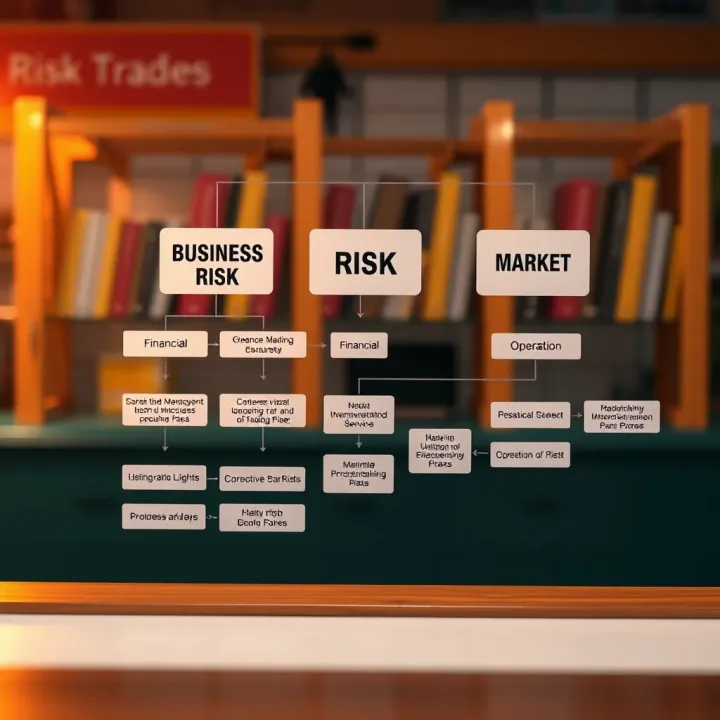
📊 Understand risk management basics and methods that Kenyan businesses can apply to stay resilient, make smarter decisions, and secure growth.
📊 Understand risk management essentials: key concepts, types of risks, and practical strategies tailored for Kenyan businesses and professionals.
Based on 8 reviews