

Practical Strategies for Forex Trading Success
Master forex trading with practical tips on styles, risk management, and market indicators 📈. Build a disciplined plan for consistent success in Kenya and beyond.
Edited By
Emily Clarke
Forex trading has become a popular avenue for Kenyans looking to diversify their income streams beyond traditional businesses and agriculture. With the rise of digital platforms and mobile money services like M-Pesa, accessing the forex market is easier than ever. However, success demands more than just logging in and clicking buy or sell. You need proven strategies that fit the Kenyan trading environment.
Traders here face unique challenges: volatile local currency fluctuations, limited access to timely global market information, and varying levels of regulation across different broker platforms. To navigate these, having clear, practical methods can make the difference between steady gains and unnecessary losses.

This guide lays out straightforward forex strategies tailored for Kenyan traders. It covers essential techniques such as trend following, breakout trading, and risk management using Kenyan Shillings as your base currency. Also, you will find advice on where to find credible resources and trading PDFs to deepen your knowledge.
Successful forex trading hinges on consistent application of tested strategies combined with disciplined risk control rather than trying to predict every market move.
By focusing on realistic approaches that work within Kenya’s markets, this guide aims to equip you with solid trading skills that can grow your portfolio over time. Whether you’re an investor, a broker, a finance analyst, or a student eager to enter forex, you'll find actionable tips that speak directly to your trading needs.
Next, we’ll look at some foundational concepts every trader must master before jumping into complex tactics. Keep in mind that forex is not a quick-rich scheme but a skill you can develop with patience and good strategy.
Before diving into trading strategies, Kenyan traders must grasp the basics of forex trading to build a strong foundation. Understanding what forex trading involves and who participates can help you make informed decisions rather than guessing or following hot tips blindly.
Forex trading is the buying and selling of currencies on the global market. Unlike stocks, forex trades happen around the clock across different time zones, which means you can trade anytime—day or night. For example, a trader in Nairobi might buy US dollars (USD) with Kenyan shillings (KES) if they expect the dollar to strengthen, aiming to sell later for a profit. It’s important to realise that forex trading deals with currency pairs, so you’re always exchanging one currency for another.
The forex market includes various players, each with distinct roles. Central banks, such as the Central Bank of Kenya (CBK), intervene occasionally to stabilise the shilling. Commercial banks handle large currency volumes facilitating trade and investment flows across borders. Retail traders—like many Kenyans using online brokers—speculate on price movements hoping to profit from changes in exchange rates. Additionally, multinational companies participate to hedge against currency risks. Knowing who influences the market helps you understand why the shilling might strengthen or weaken on any given day.
Major currency pairs are the most traded and tend to have better liquidity and tighter spreads, making them ideal for newcomers. These typically include EUR/USD (euro vs US dollar), USD/JPY (US dollar vs Japanese yen), and GBP/USD (British pound vs US dollar). For Kenyan traders, the USD/KES pair is highly relevant since M-Pesa payments, imports, and remittances often involve US dollars. Tracking how these currency pairs move can give clues about shifts in global trade or economic sentiment that might impact the shilling indirectly.
Getting comfortable with how forex works and who drives the market can save you from costly mistakes. Starting with major currency pairs like USD/KES keeps trading simpler and more predictable.
By mastering these basics, you position yourself to understand more complex strategies as you proceed. The forex market is dynamic but knowing these fundamentals will help you stay grounded and trade smarter.
Understanding popular forex trading strategies is vital for any trader hoping to succeed in Kenya's vibrant forex market. These strategies offer frameworks traders can adopt, helping them make disciplined decisions under variable market conditions. Each approach has distinct strengths and suits different trading styles, risk appetites, and time commitments.
Trend following is among the most traditional and widely used forex approaches. It involves identifying a prevailing market direction—either upward or downward—and making trades that align with that movement. For example, if the USD/KES pair shows a consistent upward swing over days, a trend follower would initiate buy positions to ride that momentum. This strategy works well in markets with clear and sustained price trends but requires patience and discipline to avoid forcing trades during sideways moves.
Range trading suits markets that lack strong trends, moving instead within defined support and resistance levels. Traders spot price floors (support) and ceilings (resistance) and buy near support while selling near resistance. For instance, if EUR/USD bounces repeatedly between 1.10 and 1.15, a range trader profits off these oscillations. In Kenya, where some currency pairs can remain quiet for weeks, range trading helps seize predictable, repeated opportunities. Still, traders must watch for breakouts that signal a trend change.
Breakout traders look to catch sharp moves when price breaks beyond a range or chart pattern. It might be after a period of low volatility when a currency suddenly surges past resistance. For example, if GBP/USD breaks above a key 1.30 level with volume picking up, a breakout trader would enter a buy position aiming for swift profits. This strategy demands quick action and good risk management since false breakouts can trigger losses. It suits those who can monitor markets actively, which Kenyan traders often do via mobile platforms.
Scalping involves making multiple quick trades, typically holding positions for minutes or even seconds. The goal is to profit from small price changes, accumulating gains over many trades. A scalper may trade the USD/JPY pair numerous times daily, aiming for small spreads with tight stop-loss orders. This style requires intense focus, fast execution, and often the use of advanced trading platforms. While scalping can be demanding, it appeals to active Kenyan traders who want immediate results and have access to reliable internet.
Mastering these strategies takes practice and adaptation to local market nuances. Kenyan traders must consider factors like liquidity, market hours, and available platforms when selecting the right approach to boost their forex trading success.
Managing risks and preserving capital are fundamental parts of successful forex trading, especially in a market as volatile as forex. Kenyan traders often face sudden price swings influenced by global events or domestic news like interest rate decisions from the Central Bank of Kenya (CBK). Without proper risk management, even a well-thought trading strategy can lead to significant losses. Taking steps to protect your capital ensures you stay in the game and have a chance to grow your investments steadily.
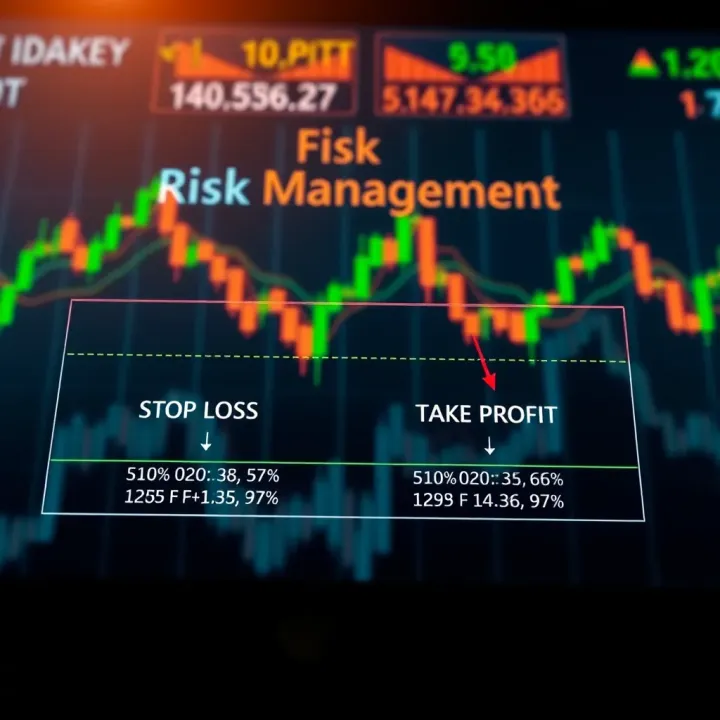
Stop loss and take profit orders act as safety nets. A stop loss order automatically closes a trade when the price moves against you by a certain amount, limiting your potential loss. For example, if you buy EUR/USD at 1.1000 and set a stop loss at 1.0950, your position will close if the price drops to 1.0950, protecting you from further losses. On the other hand, a take profit order locks in gains by closing the trade once it hits a certain favourable price. Kenyan traders should avoid trading without these orders because the forex market can move quickly, and it’s easy to lose track, especially when juggling other daily activities.
Position sizing is about how much money you commit to each trade relative to your total trading capital. For instance, if you have KSh 100,000 and risk 2% per trade, you should not risk more than KSh 2,000 on any single trade. This keeps losses manageable and your account safe from being wiped out by one bad trade. As for leverage, although it allows you to control bigger positions with less capital, it can magnify both profits and losses. Kenyan traders should use leverage cautiously, as overleveraging can quickly lead to margin calls and wiped-out accounts. It’s better to trade smaller with moderate leverage and consistent discipline.
Volatility means the price moves up and down quickly and unpredictably. Times of high volatility, such as during major elections or unexpected CBK announcements, can cause wild price swings. To guard against this, Kenyan traders can diversify by trading multiple currency pairs or adjusting trade sizes. Avoid trading during known volatile times if you’re not comfortable. Tools like trailing stops can also help secure profits while giving room for prices to move. Regularly reviewing your trading plan to reflect current market conditions is essential to stay ahead of volatility.
Effective risk management is not about avoiding losses altogether but controlling them so your capital lasts and your trading remains sustainable.
By applying these risk management tactics, you protect your shillings and build confidence to trade smarter in the forex market.
Forex trading strategy PDFs can be a handy resource for Kenyan traders. They offer detailed outlines, charts, and step-by-step guides that you can study at your own pace. Unlike random online articles or videos, these documents often come from reputable sources or experienced traders and provide focused content that you can refer back to anytime.
Start with well-known forex educational platforms like BabyPips or Forex Factory, which offer free PDFs on various trading strategies. Some Kenyan brokers such as EGM Securities or HF Markets also provide strategy guides tailored for local traders. Be cautious of downloading random PDFs from unknown websites as they may contain outdated or misleading information. Official broker websites, educational institutions offering trading courses, and forex forums with community reviews tend to be safer choices.
Reading a strategy PDF is just the first step; applying it effectively matters most. Begin by practising on a demo account offered by platforms like MetaTrader or cTrader. This lets you test the strategy without risking real money. When reviewing the PDFs, highlight key signals or rules, and create your own checklist or trading journal to track your progress. For example, if a PDF emphasises using RSI (Relative Strength Index) to enter trades, make sure you understand how the indicator behaves during Kenyan market hours specifically, as local market activity influences currency pair volatility.
Most forex strategies are developed with global markets in mind, so tweaking them for the Kenyan context is crucial. Consider factors like Nairobi Stock Exchange (NSE) trading hours, local economic events (such as CBK monetary policy announcements), and typical liquidity levels during business days. For instance, a breakout strategy might be less effective during Kenyan public holidays when market volumes drop. Adjusting stop-loss limits or position sizes according to local volatility can help manage risk better. Another practical tip is to pair strategies with local forex broker spreads and commissions, ensuring your plans remain profitable even with extra trading costs.
Using detailed strategy PDFs helps you build a solid foundation, but adapting those strategies to your unique trading environment makes all the difference. Keep testing and fine-tuning until you find what works best for you.
By recognising where to find quality PDFs, knowing how to implement their advice, and customising them wisely, Kenyan traders can enhance their forex skills and improve decision-making. These documents serve as practical guides, providing structure amid the often unpredictable market.
When it comes to forex trading, having the right tools and platforms can make all the difference. Kenyan traders face unique challenges, from fluctuating internet connectivity in some regions to the need for brokers who understand local regulations. Using appropriate tools helps you trade smarter, reduce risks, and react quickly to market changes.
Start by selecting a broker regulated by the Capital Markets Authority (CMA) of Kenya or reputable international bodies like the Financial Conduct Authority (FCA). A CMA-licensed broker ensures compliance with local laws, protecting your funds and offering reliable customer service within Kenya’s timezone. Popular brokers in Kenya with proper licensing include EGM Securities and Tickmill Kenya. Avoid unregulated brokers; some may offer tempting perks but eventually vanish, leaving traders stranded.
Most Kenyan traders rely heavily on mobile apps due to the widespread use of smartphones and mobile data. MetaTrader 4 (MT4) and MetaTrader 5 (MT5) remain the most popular platforms globally, offering user-friendly interfaces, real-time charts, and automated trading options. Additionally, platforms like cTrader provide enhanced charting tools and faster execution, favouring active traders.
Mobile apps from brokers like EGM Securities or HotForex not only support trades but also facilitate deposits and withdrawals through M-Pesa, a convenient choice in Kenya. Choose platforms that run smoothly even on modest internet speeds – this ensures you won’t miss key market moves if your connection wobbles.
Technical analysis helps you read market trends and decide when to enter or exit trades. While many platforms come with built-in technical tools, specialised software like TradingView offers advanced charting and community-shared strategies. Kenyan traders can use these tools to spot patterns in currency pairs like USD/KES or EUR/USD.
It's worth practising with demo accounts before applying real money. Technical tools can get complex quickly, so take time to master indicators like moving averages, RSI (Relative Strength Index), and Fibonacci retracements. These tools help you avoid guesswork and base decisions on concrete data.
Reliable tools and platforms are your trading companions. They help turn informed strategies into real gains, especially when paired with discipline and local market understanding.
In summary, choose a CMA-regulated broker with strong Kenyan presence, pick a reliable mobile-friendly trading platform integrated with local payment options, and sharpen your edge with technical analysis software. This combination sets a solid foundation for consistent forex trading in Kenya.
Master forex trading with practical tips on styles, risk management, and market indicators 📈. Build a disciplined plan for consistent success in Kenya and beyond.

📈 Want to start forex trading in Kenya? Learn how to choose a trusted broker, comply with KRA regulations, set up your account, and manage risks for success.

Learn how to start forex trading safely in Kenya! Understand key terms, pick the right broker, manage risks, and avoid common mistakes to trade confidently 💱📊

📈 Ready to start forex trading in Kenya? Learn how to pick trusted brokers, understand regulations, manage risks, and grow your trading skills with ease and safety!
Based on 8 reviews