

Principles of Risk Management for Kenyan Businesses
📊 Learn how to identify, assess, and control risks in Kenyan businesses. Understand risk culture, treatment, and monitoring to safeguard your organisation’s goals.
Edited By
Henry Wallace
Risk management might sound like heavy jargon, but it’s really about a simple idea: preparing for the bumps along the road. For traders, investors, finance analysts, and brokers in Kenya, understanding how to manage risk can be the difference between steady growth and unexpected losses.
At its core, risk management means identifying what could go wrong, figuring out how likely it is, and then taking steps to lessen its impact. Whether it’s fluctuating forex rates affecting your import business, a matatu route facing new regulations, or an investment portfolio hit by global market swings, risks are everywhere.

By recognising risks early, you can make smarter decisions. For example, if you run a small retail duka in Nairobi, being aware of theft risks might lead you to install CCTV or partner with reliable security firms, reducing possible losses. Investors on the Nairobi Securities Exchange (NSE) monitor company performances and sector trends to avoid pitfalls before making a trade.
Effective risk management doesn’t just rely on luck or quick fixes. It’s a systematic process, often involving these key steps:
Identification: Spotting potential risks both inside and outside your business environment.
Assessment: Measuring how probable the risk is and what harm it could cause.
Mitigation: Planning ways to reduce or transfer the risk, like insurance or diversification.
Monitoring: Continuously watching for new risks and changes in existing ones.
Managing risk is not about avoiding every problem but handling uncertainties smartly to protect what matters most.
Practically, a trader might hedge currency risks by using contracts that lock in exchange rates. A finance analyst assessing a company could evaluate credit risks by reviewing the borrower’s history. These approaches highlight a proactive mindset, aiming to stay ahead of challenges.
In Kenya’s dynamic markets, where unexpected policy shifts or weather patterns can impact business, having a clear grasp on risk management principles equips you to tackle uncertainty effectively. This understanding brings confidence whether you are running a jua kali workshop, managing a large portfolio, or analysing market trends.
With this foundation in place, we can explore specific risk management methods and practical tips applicable across sectors in Kenya and beyond.
Understanding the meaning of risk and risk management sets the foundation for anyone looking to protect their investments or businesses. In simple terms, risk involves uncertainty about future events that could affect your goals either negatively or positively. Managing risk means identifying, assessing, and controlling those uncertainties to reduce potential harm or take advantage of opportunities.
This section helps clarify what exactly constitutes risk and why taking a structured approach to risk management is necessary, especially for traders, investors, and finance analysts working in Kenya's dynamic markets.
Risk is essentially about uncertainty and how it can impact outcomes. For example, a small-scale maize farmer in Kisumu might face the risk of erratic rains affecting the harvest. This uncertainty puts the farmer's income and food security at stake. In finance, uncertainty could mean fluctuations in the Nairobi Securities Exchange share prices that affect investment returns. The impact varies from minor inconveniences to significant losses, depending on the nature and scale of the risk.
By understanding both the uncertainty and its possible consequences, businesses and individuals can better prepare to face or adapt to challenges.
Risks come in varied forms, from financial risks like currency instability or loan defaults, to operational risks such as power outages disrupting a factory's production line. For a trader using M-Pesa, the risk may include mobile fraud or failed transactions. On the personal side, health risks or accidents pose uncertainties just as real as business dangers.
Separating risks into categories—strategic, financial, operational, compliance, or reputational—makes it easier to identify and address them with tailored strategies.
Managing risk helps avoid or lessen losses and ensures continuity. A stockbroker in Nairobi, for instance, must manage market risks to safeguard client investments and comply with Capital Markets Authority (CMA) rules. Without proper management, unexpected events could wipe out gains or even cause business closure.
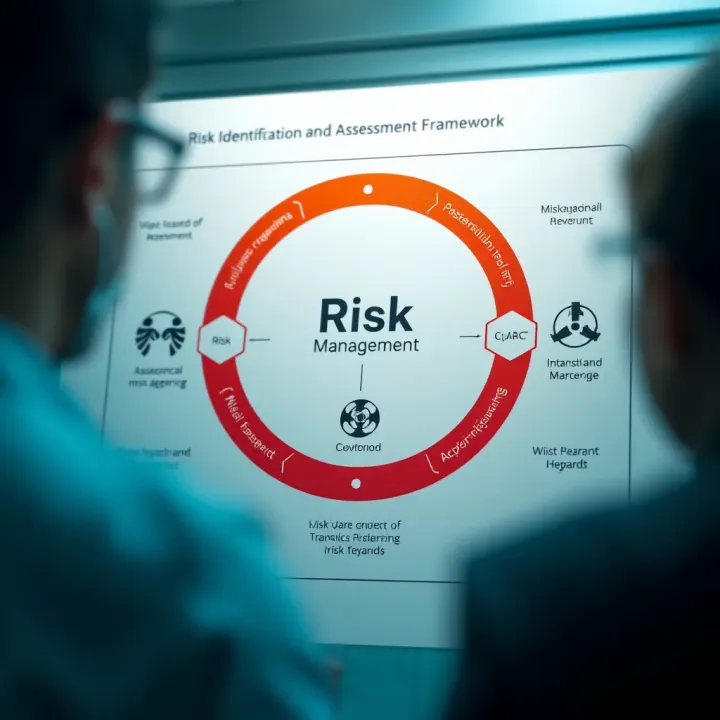
Effective risk management also builds confidence among stakeholders, whether investors, customers, or regulatory bodies. It demonstrates professionalism and readiness to navigate uncertainties.
Risk management is not a one-person task. It requires participation from various levels—top management who set policies, finance teams tracking monetary exposures, operations officers handling day-to-day risks, and even individual employees aware of their roles.
In Kenyan SMEs, the owner often wears multiple hats but should still seek expert advice when necessary. Traders and analysts should actively engage with compliance officers and leverage platforms like eCitizen for regulatory updates.
Risk management works best as a collective effort, combining diverse knowledge and responsibilities across an organisation or venture.
Clear roles and shared responsibility help create a culture where risks are seen, addressed early, and not ignored until they escalate.
This understanding of risk and its management lays the groundwork for identifying risks thoroughly, assessing them properly, and responding effectively, which the following sections will address in detail.
Identifying risks thoroughly is a cornerstone of effective risk management. Without a clear and complete picture of potential threats, businesses and individuals expose themselves to unexpected challenges that could derail their operations or investments. In Kenya, where economic shifts and environmental factors can change quickly, thorough risk identification helps traders and investors prepare for disruptions rather than react after the fact.
Risk checklists and brainstorming are straightforward yet effective methods for spotting risks. Checklists guide teams through common risks based on past experiences or industry standards, helping avoid oversight. For example, a small café in Nairobi might use a checklist to consider risks like supplier delays, power outages, or changes in customer demand during festive seasons. Brainstorming, on the other hand, encourages team members to think creatively and bring up less obvious risks, such as new competitors or social unrest affecting foot traffic. This technique thrives in group settings where diverse perspectives can uncover hidden vulnerabilities.
Expert consultation and SWOT analysis provide a deeper insight into risks specific to a business or sector. Consulting specialists—like financial advisors, sector analysts, or environmental consultants—introduces expert knowledge that internal teams might lack. This approach is vital when entering new markets, such as Kenyan agribusiness ventures needing advice on climate risks or export regulations. Similarly, SWOT (Strengths, Weaknesses, Opportunities, Threats) analysis helps organisations frame risks in relation to their internal capabilities and external environment. A manufacturing firm might identify a threat in the rising cost of imported raw materials but also recognise its strength in local sourcing, which can mitigate this risk.
Considering local economic and environmental factors is essential for a realistic risk picture. Kenya experiences seasonal weather patterns, with long and short rains that significantly affect agriculture-based businesses. Likewise, fluctuations in fuel prices or interest rates impact transport companies and small traders. By factoring these local conditions, businesses can prepare risk responses suitable for their actual operating environments. For instance, a boda boda operator may plan for rainy season disruptions while arranging alternative income sources during off-peak times.
Risks unique to Kenyan industries and communities must also be addressed directly. Some Kenyan sectors face specific challenges—for example, tea and coffee farmers deal with global commodity price swings and local labour strikes. Tech startups might confront regulatory uncertainty or infrastructure gaps in internet access. Beyond industries, community-specific issues like land disputes in rural areas or security concerns in urban informal settlements shape risk profiles differently. Recognising these unique risks allows businesses and individuals to tailor their risk management strategies effectively, ensuring they stay relevant and responsive.
Identifying risks is not just about listing potential problems, but understanding which ones can hit your specific business or community the hardest. Thorough identification fuels smarter decisions and stronger resilience in Kenya's dynamic environment.
Assessing and prioritising risks is a key step that helps traders, investors, and finance analysts know which threats demand their immediate attention and which ones can wait. Without properly evaluating risks, resources can be wasted dealing with minor issues while critical threats remain unchecked. In the Kenyan context, where businesses often operate with limited capital and shifting economic conditions, prioritisation ensures that effort and funds go straight to where they matter most.
Qualitative and quantitative methods offer two ways to evaluate the chances a risk will happen and the damage it might cause. Qualitative assessment relies on expert judgement, categorising risks as ‘low’, ‘medium’, or ‘high’ based on experience. For example, a stockbroker noticing political instability ahead of elections might rate the risk of market volatility as high even if exact figures aren't available. Quantitative assessment uses numbers, such as determining the probability of a loan default based on past data. Kenyan banks often use such models when deciding loan terms.
Using risk matrices helps by visually ranking risks based on their likelihood and impact. Imagine a 5x5 grid where one axis shows how likely a risk is to occur, while the other shows the potential severity. A business might place currency fluctuation risk in the high-impact, medium-likelihood box, while petty theft might fall into low-impact, low-likelihood. This visual tool makes it easier to spot which risks deserve immediate action and which ones can be monitored.
Allocating effort where it matters most means focusing limited resources on high-priority risks. For example, a small investment firm in Nairobi might not afford expensive cyber-security systems but should invest enough in staff training and affordable firewalls to reduce online threats. By contrast, risks with minor effects might only need basic monitoring.
Recognising acceptable risk levels is about understanding that some risks can’t be eliminated but are tolerable given their impact and cost of control. For instance, a jua kali artisan accepting occasional theft of low-value tools might prefer this to spending heavily on security. Setting these thresholds allows businesses to avoid over-spending on risks that do not threaten their survival or profitability.
Prioritising risks thoughtfully lets Kenyan professionals get the best value from their efforts, making sure critical threats get tackled promptly while smaller ones are kept in check without draining resources.
Use both qualitative and quantitative methods for a clearer risk picture
Apply risk matrices for straightforward ranking
Focus resources on risks that can cause serious damage
Define acceptable risk to avoid unnecessary costs
Effective risk assessment and prioritisation protect your investments and help maintain smooth operations, especially when market conditions shift fast or resources are tight.
Responding to risks effectively is about more than just reacting to challenges; it's about taking deliberate steps to safeguard your business or investments. When traders, investors, or finance professionals handle risks thoughtfully, they reduce potential losses and position themselves to benefit from uncertainties. In the Kenyan context, where markets can shift quickly due to political events, weather patterns affecting agriculture, or currency fluctuations, knowing how to respond to risks can make all the difference.
Managing risk usually involves four main approaches: avoidance, reduction, sharing, and acceptance. Avoidance means steering clear of activities that carry high risks—like a portfolio manager deciding not to invest in unstable sectors during election seasons. Reduction focuses on minimising the impact or likelihood of risks; for example, a farmer might use irrigation systems to reduce drought risk. Sharing involves transferring some of the risks to others, such as through insurance or partnerships. Finally, acceptance means recognising certain risks as inevitable and planning to absorb them, often when the cost of mitigation outweighs the benefits.
Choosing the right strategy depends on the risk's nature and your capacity to handle it. For instance, a forex trader might avoid certain volatile currency pairs but accept minor price swings in more stable ones. The choice is practical, weighing costs against potential damage. By assigning the appropriate response to each risk, businesses in Nairobi or Kisumu can optimise their risk-management efforts without overstretching resources.
Solid policies and procedures form the backbone of risk management. By clearly defining steps and responsibilities, organisations ensure everybody knows how to react when a risk arises. In a stock brokerage, for example, having clear policies for transaction verification helps prevent fraud and operational errors. Well-documented procedures also maintain consistency, so risk responses aren’t left to guesswork.
Training and awareness are equally important. A firm can have the best policies but if staff don’t understand the risks or their role in managing them, vulnerabilities persist. Regular workshops or e-learning sessions tailored to Kenyan market realities can boost employees’ ability to spot and manage risks early. For example, educating sales teams on how to avoid client scams through M-Pesa fraud can save millions. Awareness nurtures a culture of caution and readiness that helps organisations bounce back from shocks more quickly.
Effective risk response isn’t about eliminating all uncertainty but managing it smartly through well-chosen strategies and strong internal controls.
By combining these approaches, Kenyan traders and finance professionals can better protect their ventures and build stronger institutions ready to withstand the ups and downs of the market.
Keeping a close watch on risk management processes is key to staying ahead of potential threats. This ongoing effort helps identify if established strategies are working or need updates. For traders and investors in Kenya, the risk landscape can shift quickly due to variable market conditions, making continuous monitoring vital.
Tracking risk indicators means keeping an eye on signs that a risk may be increasing or materialising. These indicators can be financial metrics, market trends, or external factors like political changes or weather events affecting supply chains. For example, a stockbroker noticing sudden high share price volatility or unexpected regulatory announcements might flag these as early warnings to adjust investment portfolios.
Adjusting strategies is about being flexible once new information emerges. Markets and industries in Kenya evolve rapidly, and sticking rigidly to old risk plans can lead to losses. A forex trader might revise stop-loss limits after shifts in the US dollar-Kenyan shilling exchange rates, or a small business owner could tweak supplier contracts when transport disruptions hit due to adverse weather. This adaptability reduces potential damage and helps seize emerging opportunities.
Conducting risk audits and post-incident reviews means going over what happened when a risk occurred or nearly happened. This practice reveals weaknesses in the system or unexpected outcomes. For instance, a bank analysing a failed loan recovery can learn about borrower profiles or economic pressures that require different lending criteria. These lessons feed into making more informed, resilient decisions.
Improving risk frameworks over time is about taking what you've learned and refining policies, procedures, and tools. Kenyan companies might update their monitoring dashboards to include new risk categories based on recent experience or train staff differently to handle emerging risks. Continual improvement ensures risk management stays relevant and effective amid shifting economic and social conditions.
Effective monitoring and review turn risk management from a one-off task into an ongoing, dynamic practice that safeguards investments and operations against uncertainty.
By focusing on these aspects, traders, investors, and finance professionals can build stronger, more responsive risk management systems tailored to the Kenyan market and business climate.
📊 Learn how to identify, assess, and control risks in Kenyan businesses. Understand risk culture, treatment, and monitoring to safeguard your organisation’s goals.

📊 Understand risk management: learn to identify, assess, and control risks that impact Kenyan businesses. Practical tips for navigating challenges in local sectors. 🇰🇪

📉 Master forex risk management for Kenyan traders! Learn key strategies to protect capital, control losses, and trade confidently in volatile markets.
Explore how Kenyan businesses manage compliance and risks, tackle challenges, adopt best practices, and use technology for safer operations 📊⚖️
Based on 5 reviews