

Operational Risk Management for Kenyan Businesses
📊 Learn how Kenyan SMEs can identify and control daily business risks with easy-to-follow steps and build a strong risk-aware culture to protect their operations.
Edited By
Chloe Bennett
At its core, risk management aims to identify, analyse, and control risks that could cause losses or disrupt business goals. These risks could be anything from currency fluctuations affecting import costs, to delay in supply chains due to transport strikes, or even cyber threats targeting mobile money transactions.
Effective risk management isn't just about avoiding loss; it's about making smarter decisions that keep your business stable and ready to handle challenges.

Key objectives include:
Identifying risks early: Knowing what might go wrong allows organisations to prepare in advance. For example, a trader dealing in imported electronics must watch exchange rate trends closely to prevent shocking cost increases.
Analysing impact and likelihood: Not all risks carry the same weight. Assessing how likely a risk is to happen, and how badly it could affect the business, helps focus resources wisely.
Controlling risks: After spotting issues, taking steps to lessen their impact matters. This could mean diversifying suppliers to avoid overdependence on one, or buying insurance cover for fire hazards common in industrial areas.
Monitoring and reviewing: Risks evolve as markets and environments shift. Regular check-ins ensure that strategies stay relevant and new threats are caught early.
For Kenyan businesses, these objectives influence not only survival but also growth, especially in a competitive market with changing regulations and economic conditions. Implementing solid risk management becomes the backbone of organisational resilience and sustainability—qualities that attract investors, satisfy regulators, and secure customer confidence.
All in all, the objectives of risk management guide businesses to face uncertainty with clarity rather than fear, turning potential problems into manageable challenges.
Risk management is at the heart of keeping businesses steady and competitive, especially within Kenya’s vibrant economic environment. It means identifying potential issues before they turn into costly problems and having a plan to handle them. For instance, a tea exporter in Kericho might face fluctuating global prices, drought affecting harvests, or delays in logistics. Effective risk management helps such a business anticipate these challenges and adjust operations accordingly.
Risk management involves spotting, assessing, and prioritising threats that could impact an organisation’s goals. It’s not just about avoiding losses but also about making better decisions. The process includes analysing risks, deciding how to address them—whether to avoid, reduce, share, or accept—and then monitoring outcomes. Think about Safaricom managing risks like network failures or data breaches; they constantly update their systems and have backup plans for continuity.
Kenyan businesses deal with unique risks arising from economic shifts, political changes, and environmental factors. For example, unpredictable weather patterns linked to Kenya’s long and short rainfall seasons can affect agriculture-dependent enterprises significantly. Also, changes in government policies or tax laws, like new KRA regulations, require swift adjustments to remain compliant.
Moreover, many SME operators in the hustler economy depend heavily on mobile payment methods like M-Pesa. Any disruption or fraud risk in these systems can disrupt their daily trade, making risk management not just a corporate concern but a necessity for countless small entrepreneurs.
Effective risk management builds confidence among stakeholders, including investors, suppliers, and customers, by showing that a business is prepared for uncertainties without faltering.
In summary, understanding risk management equips businesses and organisations to face challenges head-on. It’s a practical shield guarding assets, reputation, and operations, while also enabling sound decision-making that supports growth in Kenya’s ever-changing market.
Understanding risks is the first step towards managing them effectively. For traders, investors, and finance analysts, recognising potential threats early can save significant financial losses and prepare for market swings. This process establishes a strong foundation for all other risk management activities by determining where vulnerabilities lie.
Recognising potential threats means spotting anything that could negatively impact your investments or business operations. These threats can be broad, ranging from economic downturns and political instability to currency fluctuations and sudden regulatory changes by the Capital Markets Authority (CMA). For example, a trader dealing in maize futures should consider factors like changing weather patterns affecting harvests, import tariffs, or shifts in consumer demand.
Practical steps include monitoring market trends, reviewing financial news regularly, and understanding sector-specific challenges. For Kenyan traders, it's also vital to keep an eye on factors such as inflation rates announced by the Central Bank of Kenya (CBK) and mobile money transaction regulations by the Communications Authority.
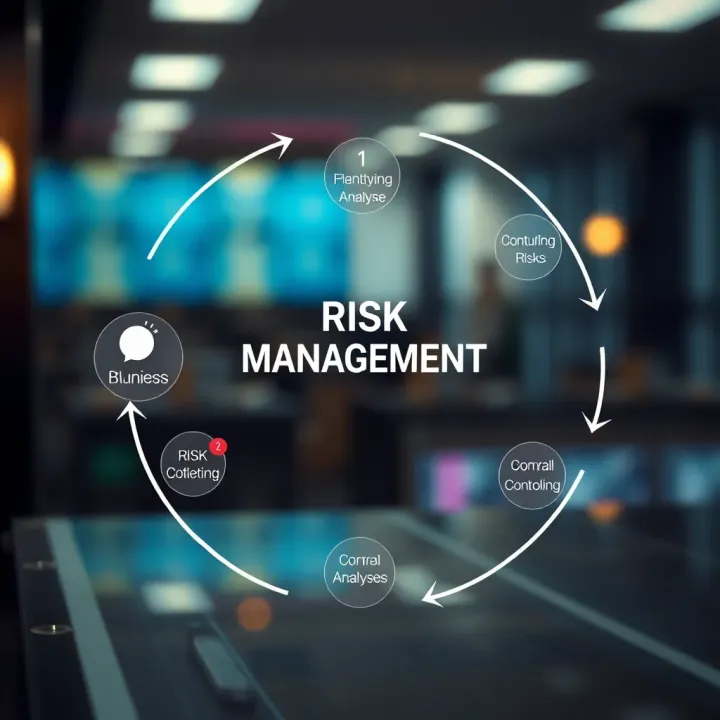
Identifying risks early can prevent them from snowballing into crises, helping you stay ahead of the curve.
Once potential threats are identified, assessing their impact and likelihood helps prioritise which risks need urgent attention. This means estimating how much a particular risk could cost you and how likely it is to occur. For instance, currency depreciation against the US dollar might have a high impact on import-heavy businesses, but if political stability is strong, the probability might be lower.
A useful approach is to classify risks into categories such as:
High impact, high probability (e.g., inflation-driven interest rate hikes) requiring immediate mitigation.
High impact, low probability (e.g., sudden national elections leading to policy shifts) that need contingency planning.
Low impact, high probability (e.g., frequent power outages) where inexpensive solutions can reduce disruptions.
In practical terms, Kenyan SMEs might use a simple scoring system to rate each risk on a scale from 1 to 5 for both impact (financial loss, reputational damage) and likelihood (how often it occurs). This will guide resource allocation and response priorities.
Thorough assessment also involves considering the interplay of risks. For example, a drought could worsen inflation and currency volatility simultaneously. Recognising such connections sharpens decision-making and resilience.
Identifying and understanding risks is not a one-off exercise but an ongoing process, especially in Kenya’s dynamic market environment. Regularly updating risk profiles ensures that you stay responsive to new threats and maintain a strong position in your trading or investment activities.
Effective risk management goes beyond just identifying potential threats; it requires active steps to reduce and control these risks before they escalate. Minimising and controlling risks helps organisations avoid costly disruptions, safeguard assets, and maintain business continuity. In the Kenyan context, where market volatility and regulatory changes are common, having clear mechanisms to manage risks ensures better stability and protects investments.
Preventive measures focus on stopping risks from occurring or reducing their likelihood. For example, a Nairobi-based retailer can avoid stock shortages by keeping close tabs on supplier reliability and diversifying suppliers rather than depending on one. Installing biometric access controls can prevent unauthorised entry to offices or warehouses, cutting down theft risks. Additionally, proper staff training on health and safety protocols lowers the chance of workplace accidents, which is crucial in factories and construction sites.
Preventive tactics are often cost-effective because dealing with problems after they happen tends to be more expensive. Regular equipment maintenance schedules in manufacturing companies prevent breakdowns that could halt production. This saves time and money compared with urgent repairs or replacing damaged machinery. These measures hinge on consistent monitoring and updating, adjusting them as the business grows and new risks emerge.
Even with strong preventive plans, risks can still materialise, especially in dynamic environments like Kenya's financial or agribusiness sectors. Developing clear response strategies ensures organisations react promptly and effectively to limit damage. For instance, after a sudden currency fluctuation, a forex trader with a hedging strategy can shield their portfolio from excessive losses.
Response plans include defining roles and responsibilities, establishing communication channels, and setting up contingency funding. During power outages, companies with backup generators and emergency protocols experience fewer operational interruptions. Similarly, insurance coverage tailored to specific Kenyan risks—such as weather-related crop damage—provides financial protection and faster recovery after adverse events.
Minimising and controlling risks are not one-off tasks but continuous processes that require adapting to changing conditions. Combining preventive measures with flexible response strategies is key to long-term resilience.
Overall, these objectives underpin sound risk management by not only anticipating problems but also effectively controlling their impact. They empower traders, investors, and business leaders in Kenya to operate confidently, knowing they have systems to handle uncertainties and protect their assets.
Strong risk management shapes how organisations make key decisions and prepares them for uncertain times. It helps leaders distinguish between manageable risks and potential threats, ensuring resources go where they’re most needed. This is vital for all Kenyan businesses, whether a small shop in Kisumu or a large firm in Nairobi’s CBD.
At its core, risk management provides crucial insights for strategy and daily operations. When a business considers expanding its product line or investing in new technology, understanding the related risks can guide better choices. For example, a Kenyan tea exporter planning to enter new markets must assess currency fluctuations, logistics challenges, and trade regulations. Ignoring these factors could lead to unexpected losses.
Using risk assessments, managers can compare options clearly. They might weigh opening a new branch against investing in digital platforms, balancing the potential returns against risks such as supply chain disruptions or political changes affecting consumer demand.
Beyond big decisions, effective risk management also supports smoother operations. It spots delays from unreliable suppliers early enough to find alternatives. In a sector like agriculture — critical to Kenya’s economy — this can prevent crop failures caused by late fertiliser deliveries or unexpected weather events.
Organisational resilience means being ready for shocks without losing momentum. Risk management strengthens this by preparing businesses for sudden changes such as regulatory shifts, economic downturns, or natural disasters. This isn’t about avoiding risk entirely but learning how to cope and bounce back quickly.
Consider a Nairobi-based logistics company facing the long rains season, which often causes flooding and road closures. A solid risk plan might include alternatives routes, stronger supplier partnerships, and contingency budgets. This ensures the company keeps deliveries on time despite disruptions.
Training staff in risk awareness also builds internal capacity. When employees understand early warning signs or the importance of protocols, the entire organisation can respond swiftly. This is particularly important in volatile sectors like finance or manufacturing, where delays or errors can have large financial implications.
Businesses that integrate risk management into their decision process and daily functions tend to withstand shocks better and sustain growth even in volatile markets.
In summary, enhancing decision-making and organisational resilience through risk management equips Kenyan businesses to make smart choices and stay strong when unexpected challenges hit. This practical approach goes beyond theory, providing real tools to navigate Kenya’s dynamic market.
Risk management plays a key role in helping organisations stick to legal rules and guard their good name. When companies comply with regulations, they avoid costly penalties, operational disruptions, and legal battles that could drain resources. For Kenyan businesses, which often navigate complex layers of county and national laws, keeping up with these requirements is a continuous task that risk management helps simplify.
Meeting legal and regulatory obligations is a primary objective within risk management frameworks. Businesses must stay updated with laws from bodies like the Kenya Revenue Authority (KRA), Capital Markets Authority (CMA), and the Central Bank of Kenya (CBK). Failure to comply with tax laws, financial reporting standards, or industry-specific regulations can lead to fines that run into millions of shillings or even loss of licence to operate.
For instance, a licensed financial services firm that misses CBK guidelines risks suspension or closure, which disrupts customer trust and revenue streams. Effective risk management puts processes in place to monitor changes in legislation and implements internal checks, so compliance becomes proactive rather than reactive.
Moreover, risk assessment helps identify where compliance might be most vulnerable – perhaps in payroll taxes or customer data protection under the Data Protection Act. By regularly auditing these areas, organisations reduce the chance of unexpected breaches.
Beyond legal obligations, risk management safeguards a company’s reputation among investors, clients, and partners. In Kenya’s vibrant and competitive business scene, reputation can be a company’s strongest asset or its biggest weakness.
Stakeholders watch closely how organisations handle challenges, and missteps can quickly erode trust. For example, a supplier failing to meet safety standards or a bank facing data leaks can lose clients and partnerships overnight. A robust risk management system helps anticipate such issues and offers clear plans to handle crises, ensuring communication remains transparent and timely.
Trust is not given freely – it is earned through consistent compliance and responsible corporate behaviour backed by strong risk control.
Maintaining stakeholder confidence also extends to social and environmental responsibility. Kenyans are increasingly supporting businesses that demonstrate ethical practices, fair labour conditions, and sound environmental policies. Hence, risk management must cover these dimensions to align with stakeholder expectations.
In summary, ensuring compliance and protecting reputation are twin pillars that keep businesses sustainable and credible. Risk management provides a structured approach to ticking off legal checklists while nurturing relationships that matter most for long-term success.
📊 Learn how Kenyan SMEs can identify and control daily business risks with easy-to-follow steps and build a strong risk-aware culture to protect their operations.

🔍 Learn how Kenyan businesses can use risk management tools to spot threats, protect assets, follow regulations, and make smarter decisions for growth and safety.

Learn how Kenyan businesses can build and apply a risk management policy to spot and handle threats, protect assets, and stay compliant for steady growth 📊🛡️
🔍 Learn how Kenyan businesses can use risk management tools to spot, assess, and tackle threats affecting operations. Get practical tips and local examples.
Based on 13 reviews